
It’s National Lead Poisoning Prevention Week
It’s National Lead Poisoning Prevention Week, an opportunity to discuss the best ways to reduce exposure to lead – because even low levels of lead in children’s blood are linked to negative impacts on intellect, concentration, behavior, and academic achievement. And so NYCHA’s Environmental Health and Safety Department (EHS) would like to share the following information on how to keep your family safe from the dangers of lead poisoning:
- Lead poisoning describes people’s exposure to lead, which can result in illness and require immediate medical attention.
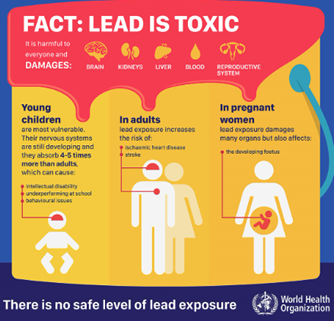
- Lead is toxic, especially for young children. When lead is breathed in or swallowed, it can cause delayed growth and development; lead to learning issues; damage the brain and nervous system; and result in hearing, speech, and behavior problems.
- Children younger than 6 years of age are particularly vulnerable to lead exposure. This is because their bodies are still developing and growing rapidly. Young children also tend to put their hands (or other objects that may be contaminated with lead dust) into their mouths.
- Lead can be found inside and outside the home. A common source of exposure is from cracked or chipped lead-based paint, which was used inside and outside many homes built before 1978 (and in other buildings and steel structures which may be near or adjacent to homes). Children can be exposed by swallowing or breathing in lead dust created by cracked or chipped paint, eating paint chips, or chewing on surfaces coated with lead dust or lead-based paint (such as windowsills).
- Lead may be in items made in other countries and imported into the United States, such as:
- Toys;
- Painted furniture;
- Metal or plastic jewelry;
- Health remedies;
- Foods, spices, and candles;
- Cosmetics;
- Lead-glazed pottery or porcelain, crystal glassware, and collectables; and
- Aluminum cookware.
Disclosure of Information on Lead-Based Paint and/or Lead-Based Paint Hazards
NYCHA must disclose the presence of known lead-based paint and/or lead-based paint hazards in any unit in housing built before 1978. To that end, NYCHA must provide residents with a completed form entitled Disclosure of Information on Lead-Based Paint and/or Lead Based Paint Hazards to disclose known information on lead-based paint and lead-based paint hazards in the unit and provide the potential resident/current resident with all available records/reports pertaining to the lead-based paint hazards. This information must be provided:
- Before a lease is signed;
- At lease renewal where lease conditions will change; and
- When new information has become available.
Once this form is accurately completed and presented to a lessee, the development’s Housing Assistant must ensure that the applicant or resident acknowledges their review of the document by signing the form. A signed copy is then kept in the tenant folder.
NYCHA’s Environmental Health and Safety Department (EHS) encourages residents to report peeling, cracked, or loose paint to NYCHA by calling the Customer Contact Center (CCC) at 718-707-7771 or using the MyNYCHA app (nyc.gov/mynycha).
Get Your Child Tested
Remind your doctor to test your child for lead poisoning at ages 1 and 2. Ask your doctor about testing older children if you think they may have been exposed to lead. Pregnant women should be assessed for lead exposure at their first prenatal visit.
If you have questions about this or any environmental health and safety matter, please email ehs@nycha.nyc.gov. Residents, employees, and any member of the public can submit environmental health and safety concerns at on.nyc.gov/submit-concern.
Click here to learn about in-person, educational events the City is hosting in partnership with community organizations during Lead Poisoning Prevention Week.
For more information about lead, please visit:
- Lead | US EPA
- Lead Renovation, Repair and Painting Program | US EPA
- Lead Safety at NYCHA
- Lead Poisoning Prevention – NYC Health
- Lead Hotline – The National Lead Information Center | US EPA
- National Lead Poisoning Prevention Week | US EPA
- National Lead Poisoning Prevention Week Information Kit
- Childhood Lead Poisoning Prevention