Black History Lived Here: Stories from The NYCHA Journal Archives
Black History Month offers an opportunity to remember NYCHA residents whose lives and legacies helped shape NYCHA communities and Black American history.
NYCHA developments have long been home to artists, activists, leaders, and others whose influence extended beyond their communities, and a look through historic issues of The NYCHA Journal, preserved in the LaGuardia and Wagner Archives, reveals their stories. Among them are activist and educator Mother Rosetta Gaston, actress and singer Mabel King, and musician Gil Scott-Heron.
Mother Rosetta Gaston
(January 29, 1885 – February 1981)
Rosetta Gaston, affectionately known as Mother Gaston, was devoted to teaching African American children and adults in her community about their history. She was a resident of Van Dyke Houses and a central figure in Brownsville, Brooklyn.
After meeting Dr. Carter G. Woodson, she founded a Brooklyn chapter of his Association for the Study of African American Life and History. She started the Children’s Cultural Corner out of her home, where she taught young children about their culture and history, which evolved into the Brownsville Heritage House, an educational and cultural center serving Brownsville on the second floor of the Brooklyn Public Library’s Stone Avenue Branch.
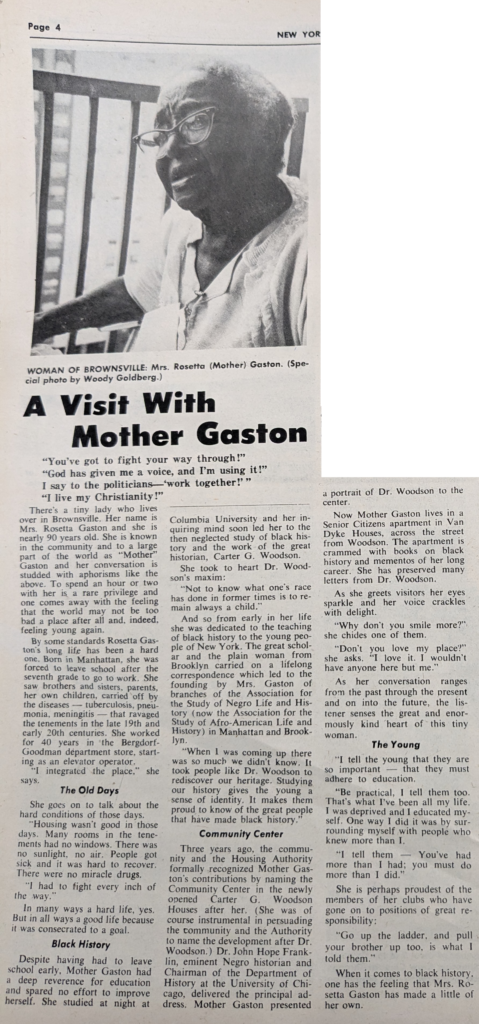
In an interview featured in the August-September 1974 issue of the Journal, she talked about how she advised the young people in her life: “You’ve had more than I had; you must do more than I did,” and “Go up the ladder, and pull your brother up too.”
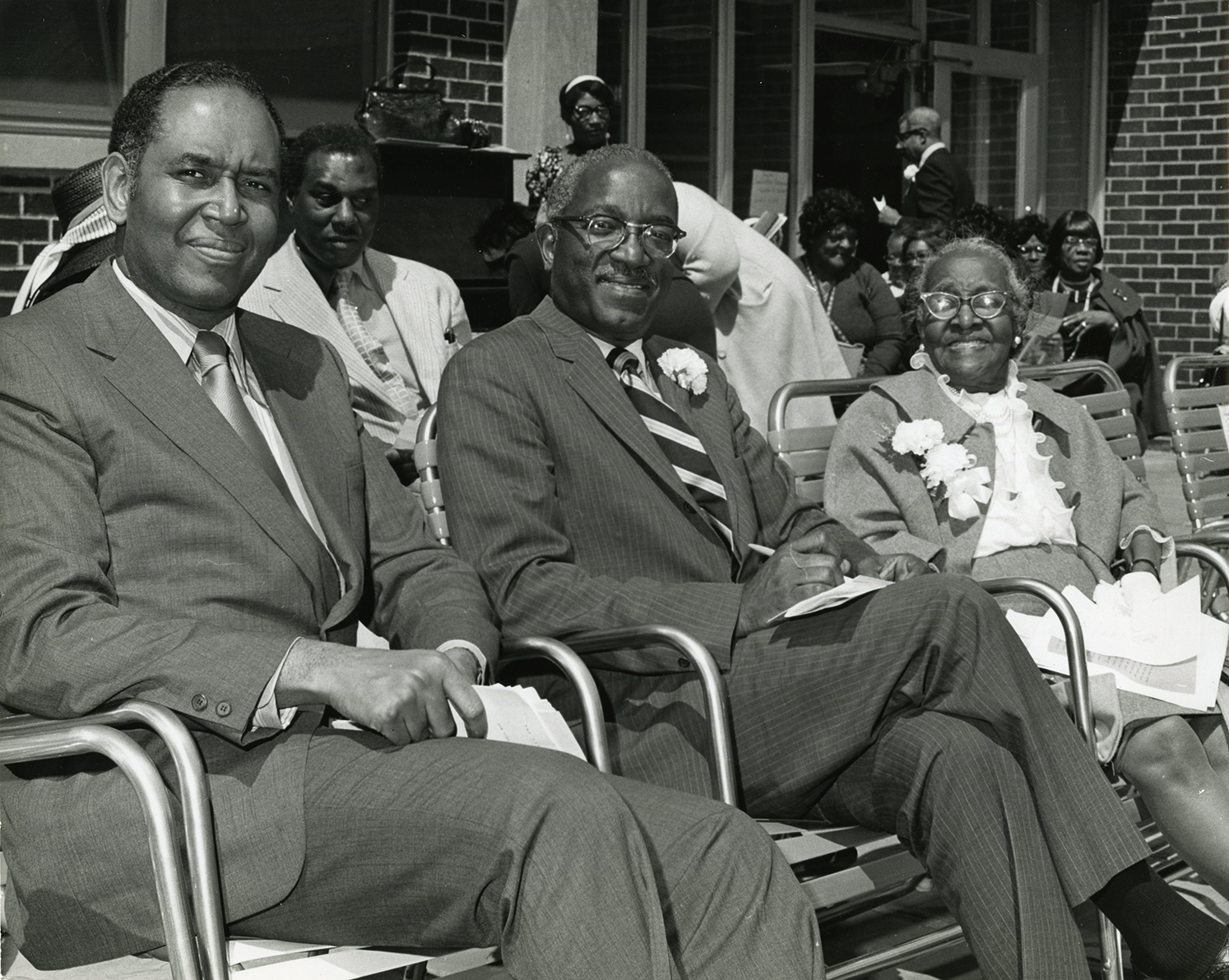
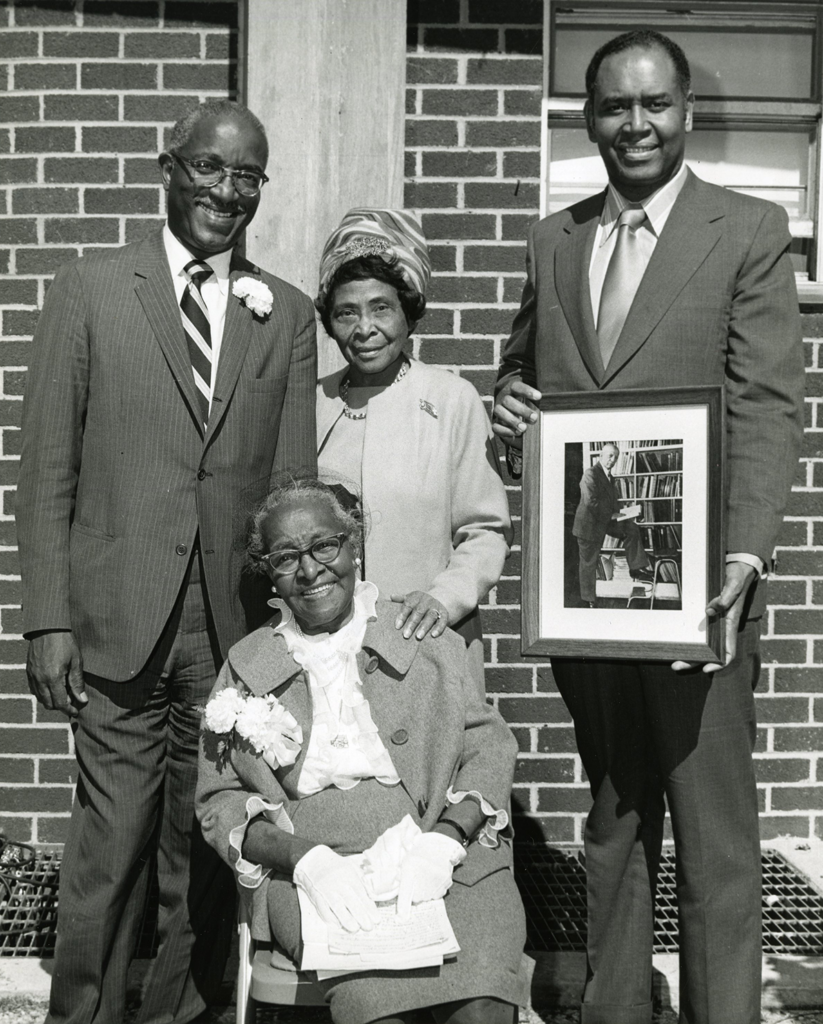
NYCHA recognized Mother Gaston by naming the Woodson Houses community center after her. She had been instrumental in persuading the Authority and the community to name the development after Dr. Woodson. In 1981, Mayor David Dinkins signed a bill to rename the stretch of Stone Avenue between Eastern Parkway and Linden Boulevard in Brownsville “Mother Gaston Boulevard.”
Mabel King
(December 25, 1932 – November 9,1999)
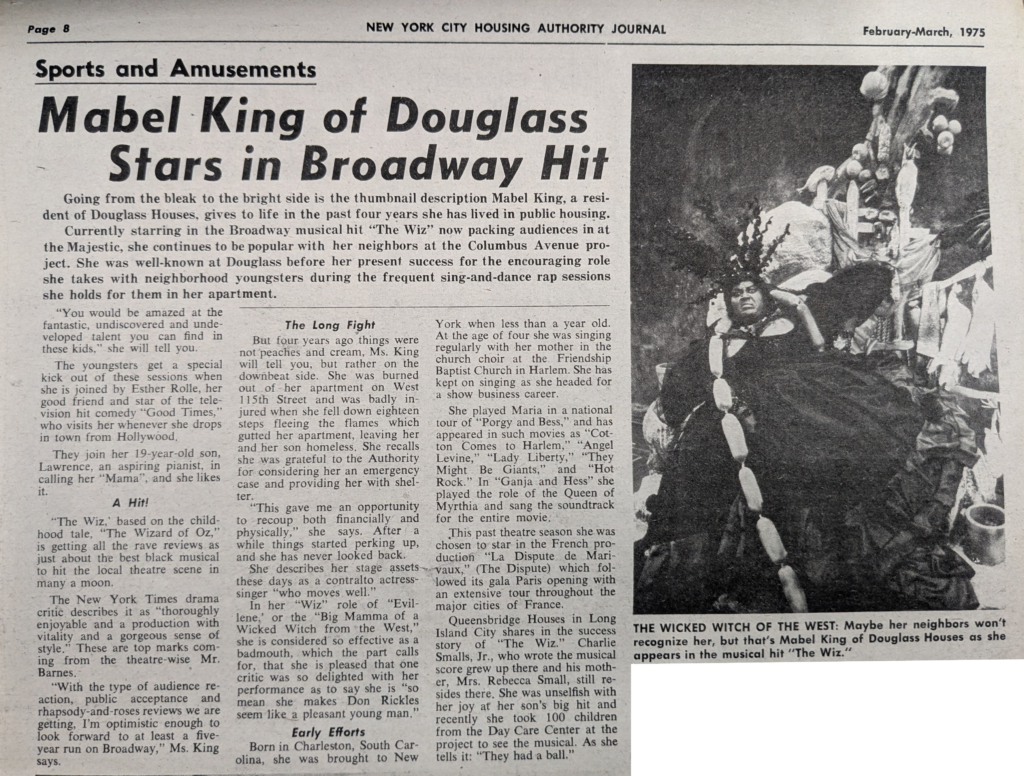
In the February-March 1975 issue of the Journal, actress and singer Mabel King was featured as a resident of Douglass Houses while starring in the Broadway musical The Wiz. She played Evillene, the Wicked Witch from the West, and later reprised her role in the film adaptation, cementing her place in pop culture history.
Ms. King shared in the Journal how her journey to success was marked with some hardship, recounting how a fire destroyed her apartment on West 115th Street, leaving her injured when she fell down the stairs trying to escape. She and her son were temporarily homeless until the Authority provided emergency housing. “This gave me an opportunity to recoup both financially and physically,” she said.
At Douglass Houses, Ms. King was known for opening her apartment to her young neighbors, hosting informal singing and dancing sessions to nurture their talent. She later moved to California for her career and became a household name as “Mama” in the television sitcom What’s Happening!!, also getting a role in The Jerk with Steve Martin as well as many other guest appearances in television shows and movies.
Gil Scott-Heron
(April 1, 1949 – May 27, 2011)
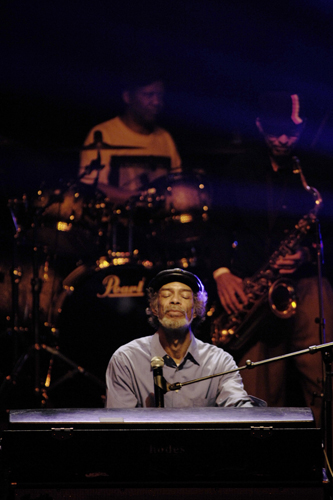
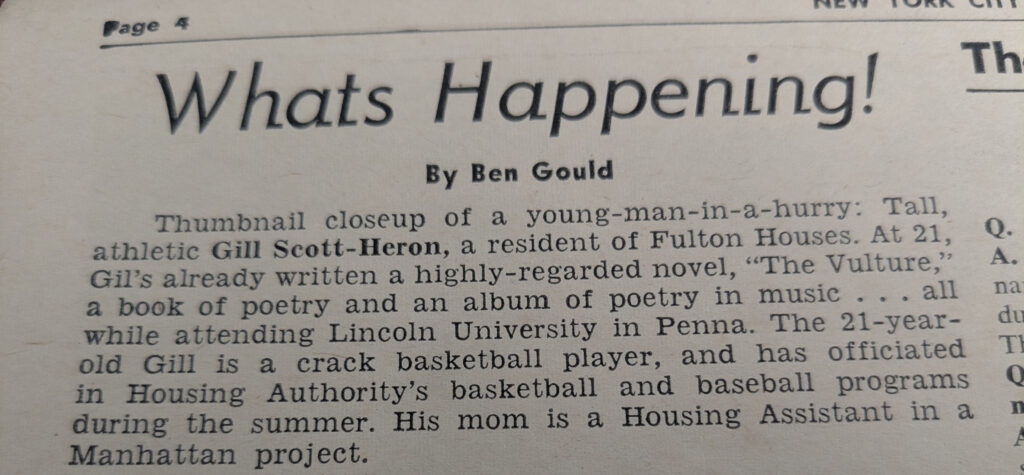
Gil Scott-Heron was a musician, poet, and novelist who lived at Fulton Houses. Mr. Scott-Heron appeared in the Journal a few times as a young man, including for his early literary success (when his novel The Vulture began receiving widespread attention) and again when he signed a contract for his third book while still in college.
Over the course of his career, Mr. Scott-Heron published five books and more than 20 albums. He called himself a “bluesologist,” and his music and work were a major influence on rap and hip-hop and have been widely sampled. His song “The Revolution Will Not Be Televised” continues to be relevant and influential in popular culture and is included in Rolling Stone magazine’s “500 Greatest Songs of All Time” list.
Beyond his writing and music, he was involved in NYCHA youth programs, helping to officiate basketball and baseball games during the summer. His mother was a Housing Assistant at Amsterdam Houses.