
Meet Sharema Harvell, A Woman Building the Future
NYCHA Celebrates Women’s History Month
For Sharema “Coach Rema The Great” Harvell, the evolution of her business began with two simple questions: “What’s missing in our communities, and how can we build it ourselves?”
Those questions reflect this year’s Women’s History Month theme, “Leading the Change: Women Shaping a Sustainable Future.” For Coach Rema, a more sustainable future means creating opportunities for women and families in her community.

Coach Rema is a Wagner Houses resident and a mother of four. She holds a bachelor’s degree in psychology with a minor in business from the College of New Rochelle and a Master of Public Administration and Affairs from Metropolitan College of New York. After years working with City agencies and nonprofit organizations in roles connected to youth development, justice reform, and community engagement, she noticed a recurring gap in services.
“A lot of programming is focused on youth,” she said. “But I kept asking, ‘What about the parents? What about the mothers and fathers raising families and trying to figure out opportunities for themselves?’”
That realization helped spark the creation of The Great Parents Club, which focuses on connecting parents to resources, leadership development, and economic opportunities. Her work continued to evolve as she launched Harvell Consulting, a leadership, facilitation, and professional transformation firm that partners with organizations and agencies to develop community-centered programming and build contract-ready facilitators. In 2024, Coach Rema made the decision to pursue entrepreneurship full time.
One of the most impactful initiatives to grow from her work is Womanaires: The Empowerment Circle, a weekly leadership and entrepreneurship circle that connects women, many of whom are NYCHA residents. The program began with a small group of women and girls to create a space where women could learn about business, share resources, and support one another’s goals.
Beyond conversation and networking, Coach Rema trains participants on practical skills such as how to start a business, register an LLC, pitch ideas, build programs, and access opportunities, including becoming a Section 3 vendor with NYCHA.
The group includes women from developments across the city, including Holmes Towers, Jefferson Houses, Carver Houses, Manhattanville Houses, Marshall Plaza, and Wagner Houses. Weekly in-person sessions typically bring together 12 to 30 women, while the initiative’s private online community has more than 350 members.
Participants range in age and experience, from teens launching their first small businesses making slime or doing lashes to women in their 60s and beyond pursuing new ventures later in life. Through Womanaires, one participant completed all the paperwork to become a NYCHA Section 3 vendor.
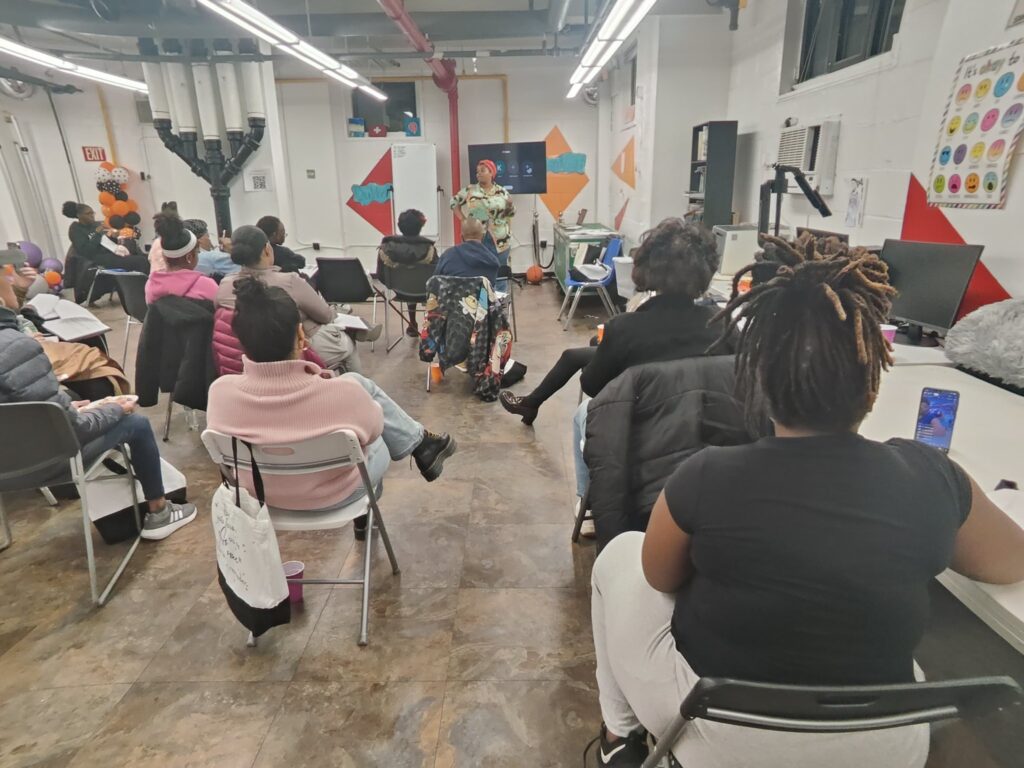
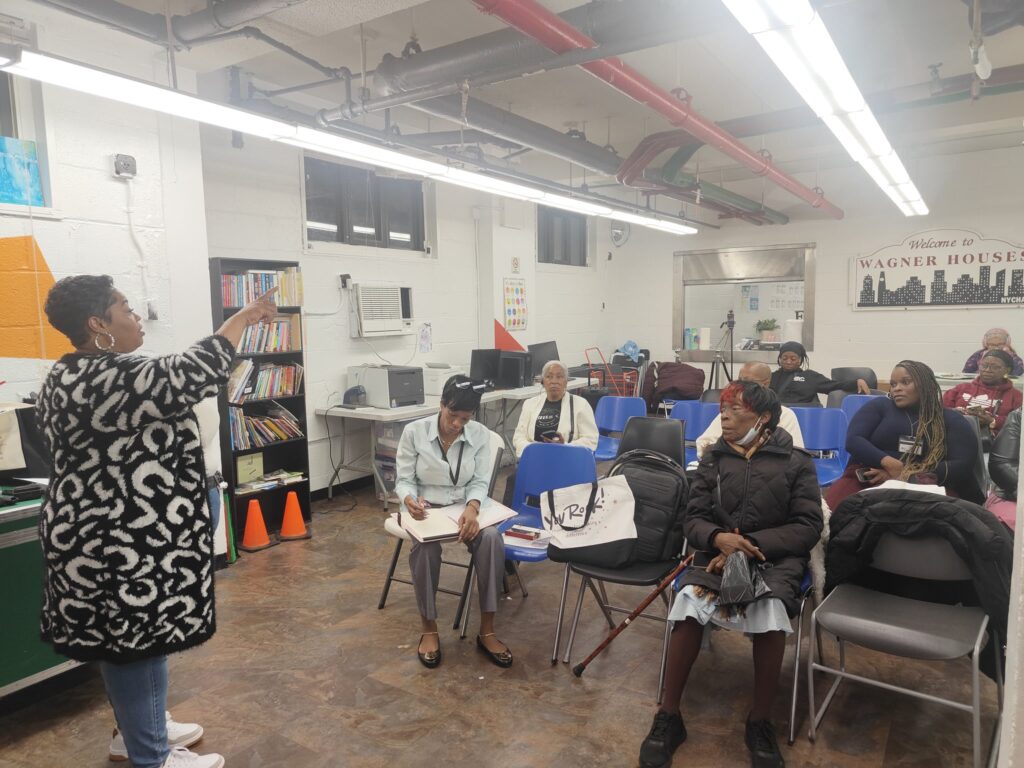
“It feels like church sometimes,” Coach Rema said. “It’s that kind of space that’s supportive, welcoming, and focused on growth.”
Coach Rema’s long-term vision is to create pathways where women not only learn business skills but also become facilitators and leaders themselves.
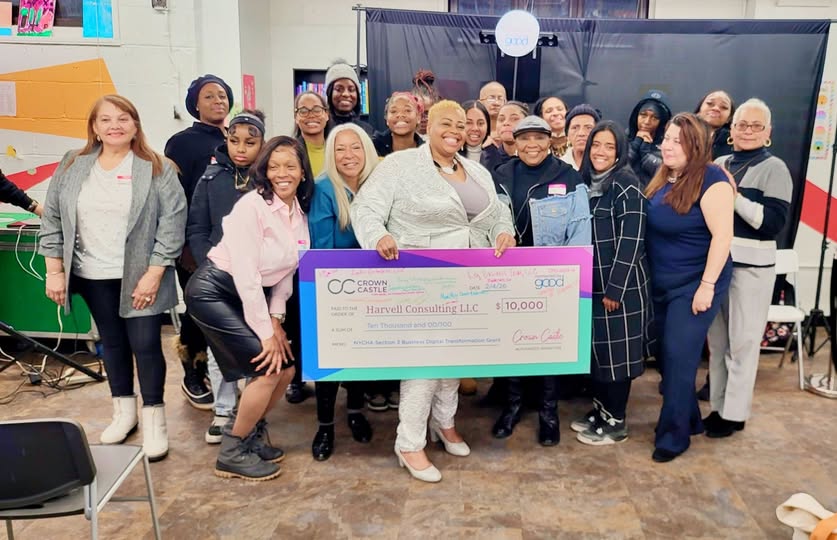
That vision received support when Coach Rema was awarded a $10,000 grant from Crown Castle through its Section 3 Other Economic Opportunity (OEO) Grant Initiative. When she won, she brought the large ceremonial check to a Womanaires meeting. (See featured photo.)
“I had all of the ladies put their names at the top of the check and then sign it. I told them, ‘The first check is mine and the next is yours.’”
The grant will help her develop training programs that equip women with professional development and facilitation skills. Her goal is to build a network of trained community leaders who can bring programming, workshops, and entrepreneurship education directly into their own communities. The initiative is also designed to build the infrastructure needed to connect trained facilitators to real contract opportunities across agencies and community-based organizations.
“If someone needs a program somewhere, I want to be able to send one of the women I’ve trained to facilitate it,” Coach Rema said. “That means they’re building experience, income, and leadership skills at the same time.”
For Coach Rema, her work is not about individual success but about creating a cycle of leadership that continues long after a single program ends. “When a woman learns how to facilitate, she learns how to lead differently,” she said. “She leads in her community, in her home, and in her life.”
She also believes that one of the most effective ways to build a more sustainable future for NYCHA residents is to listen to the people who live there. “We need more programs created by the people who actually live in our communities,” she said. “Not just programs built from the outside, but programs shaped by the lived experiences of the people in the community. When you live here, you understand what people need.”
Her message to other women – especially other public housing residents – is one of empowerment: “Don’t let where you live be your ceiling. Pay attention to what you see in your dreams, not just what you see in your reality. If you have a dream, invest in it, and build community around you while you do it.”