
Summer Safety Tips
NYCHA’s Environmental Health and Safety Department (EHS) would like to provide you with some tips for staying safe this summer!
Heat-Related Illness
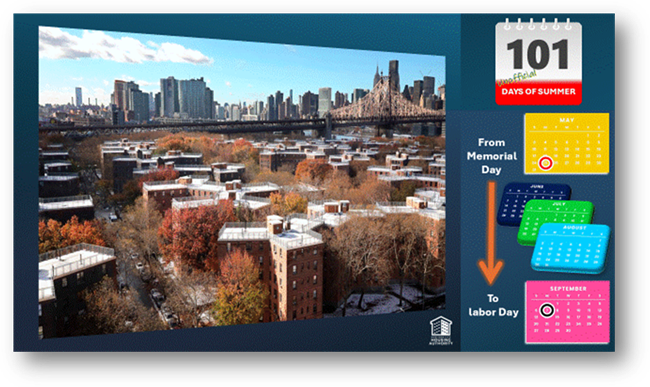
Extreme heat is when high heat meets high humidity and temperatures go above 90 degrees for at least two to three days. Your body works hard to maintain a normal temperature. You are more at risk for suffering from a heat-related illness if you are ill or have chronic health conditions, taking certain medications, overweight, or working in or exercising in the heat.
Call 911 if you or someone you know has these symptoms of heat illness:
- Heavy sweating
- Muscle cramps
- Light headedness, feeling faint
- Headache
- Decreased energy
- Loss of appetite, nausea
NYC will open cooling centers when necessary to offer people relief from the heat in air-conditioned facilities such as libraries, community/senior centers, and NYCHA facilities. Click here to find a cooling center near you.
Keeping Kids Safe
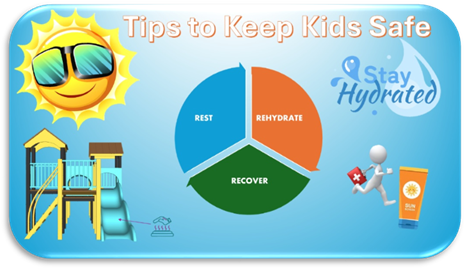
- Stay hydrated – have water or fluids available when outdoors with kids
- Wear protective clothing and use sunscreen
- Keep a first aid kit handy at home and when outdoors
- Check for hot surfaces at playgrounds; keep sanitary wipes handy
BBQ Season Safety
Summer is the season for outdoor grilling and barbecuing! Some NYCHA developments have picnic/barbequing areas for use by residents from May 1 to September 30 between the hours of 10 a.m. and 8 p.m.
- Authorization to use these areas must be obtained from your property management office by filling out Request to Use Picnic Area (NYCHA form 040.490) and submitting it to the property management office at least 10 days in advance of the requested date. If approved, property management will then provide you with the picnic/barbecuing area rules.
Please abide by these rules to ensure everyone’s safety. Safe barbecuing means constantly supervising a grill when it’s in use, disposing of used charcoal properly, and removing grease/fat buildup from the grill.
Grilling in non-designated NYCHA common areas, indoors, or on balconies is prohibited.
Family Days
NYCHA Family Days have long been celebrated at developments across the five boroughs to bring residents together to enjoy fun activities, music, and food and disseminate valuable resources from community partners. To ensure everyone’s safety, the development’s resident association must supervise the event, and also:
- Ensure that no physical alterations, including minor alterations, such as nailing into walls, are made to the indoor or outdoor spaces;
- Exercise the utmost care in the use of the development grounds or the community center on which the event takes place;
- Ensure that flyers and posters are prominently displayed to advise residents of prohibited activities; and
- Ensure set-up and proper clean-up, including the discarding of charcoal and garbage.
Wild Animals/Strays on NYCHA Property
During warmer weather, unusual animals may be seen at NYCHA properties such as racoons and skunks, along with stray dogs and cats. If the animal poses a threat, call 911. For non-emergency animal encounters, call 311 or contact property management.
Regardless of the type of animal, you should:
- Stay calm
Panic can lead to poor decisions. Take deep breaths and focus on assessing the situation clearly.
- Avoid Sudden Movements
Quick movements might provoke an attack or make the animal feel threatened.
- Do Not Run
Running can trigger a predator’s chase instinct. It’s usually best to stand your ground.
- Make Yourself Look Bigger
Raising your arms, opening your jacket wide, or standing on a rock can make you appear more intimidating.
- Back Away Slowly
If the animal is not actively attacking, slowly retreat without turning your back.
- Avoid Eye Contact (Depending on the Species)
For some animals like dogs or big cats, direct eye contact may be seen as aggression; for others, it may help assert dominance.
Contact Us
Want to report potential violations of laws, rules, or regulations; improper maintenance work intended to hide actual building conditions; poor-quality maintenance work in an apartment or building; unsafe or uncorrected conditions (including lead, mold, pests, heating, elevators, building cleanliness, and fire safety); polices or procedures not followed; or unsafe conditions for NYCHA staff? You can do so anonymously at on.nyc.gov/submit-concern.
If you have a question about this or any other environmental health and safety matter, email us at ehs@nycha.nyc.gov.