
NYCHA’s Heat Season Concludes with Strong Performance Metrics & $90+M in Heating Investments
Following the close of the 2025-26 heat season on May 31, the New York City Housing Authority (NYCHA) today announced a continuation of strong heating service performance for residents throughout the winter months. As a result of progress made since the signing of the 2019 Agreement with the U.S. Department of Housing and Urban Development (HUD), during the 2025-26 winter heating season, the Authority observed a 7 percent total decrease in heat or hot water outages over the last five years when compared to the 2021-22 season and achieved a 7.8-hour average restoration time — hours ahead of the HUD requirement of 12 hours for the seventh year in a row, or every year since the signing of the Agreement. During the 2025-2026 heat season, NYCHA also made over $90.6 million in capital heating infrastructure investments to improve heat service delivery for 10,433 residents at five developments.
“Ensuring reliable heat delivery is central to both NYCHA’s mission and our commitments under the 2019 HUD Agreement,” said NYCHA Chief Executive Officer Lisa Bova-Hiatt. “The total decrease in outages over the last five years and our ability to remain hours ahead of the HUD restoration requirement for the seventh consecutive year are direct results of our strategic approach and the tireless efforts of our staff, who work around the clock. Preparations are already underway to ensure residents remain warm during the next heat season (which starts in October).”
“NYCHA’s Heating Management Services Department staff worked exceptionally hard this winter to maintain our strong performance metrics throughout the 2025-26 heating season,” said NYCHA Chief Operating Officer Eva Trimble. “Now, during the off-season, we turn our attention to servicing our network of infrastructure and preparing to deliver another stellar heat season for residents when the heat goes back on this fall.”
Each year, during the heating season — which runs from October 1 through May 31 — all New York City building owners must maintain an indoor temperature of at least 68 degrees between 6 a.m. and 10 p.m. when it’s below 55 degrees outside. From 10 p.m. to 6 a.m., indoor temperature must be at least 62 degrees, regardless of the temperature outside. Hot water must be kept at a minimum temperature of 120 degrees at the source year-round.
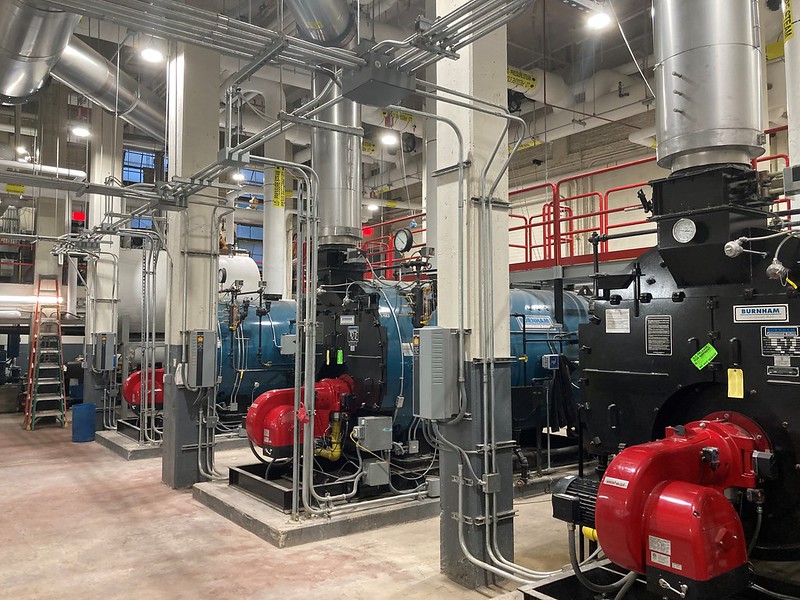
NYCHA’s Heating Management, Operations, Emergency Management and Services, and Asset and Capital Management departments work collaboratively throughout the year to repair and maintain the Authority’s extensive network of boilers, distribution equipment, and hot water systems that deliver heat and hot water service to public housing residents across New York City.
The 7.8-hour average restoration time for the 2025-26 season is 4.2 hours ahead of the HUD requirement of 12 hours, and 16.2 hours ahead of the 24-hour requirement for private landlords. A total of 98 percent of outages (2,206 out of 2,240) were resolved within 24 hours.
In keeping with the Authority’s ongoing dedication to meeting 2019 HUD Agreement obligations by investing in more sustainable, reliable, lower cost heating systems, NYCHA completed over $90.6 million in heating infrastructure upgrades at five developments across Brooklyn and Queens — Farragut, Brownsville, South Jamaica I, South Jamaica II and Breukelen Houses — during the 2025-2026 heating season. This includes over $9.5 million in building management system (BMS) capital investments at South Jamaica I, South Jamaica II and Breukelen Houses to improve heat service delivery. Additionally, between October 2025 and May 2026, NYCHA installed 56 boilers across the public housing portfolio, projects that are in the final stages of completion. Since the HUD Agreement was signed in 2019, NYCHA has replaced a total of 215 boilers at 56 developments, and currently there are active projects at 15 developments to replace another 82 boilers, which will bring the total to 297 boilers replaced by the end of 2026. These projects are funded through a mix of City, State and federal capital funds.