
Weathering the Snow Storm Safely
Dear Residents,
NYCHA is taking extra actions to respond to this storm and protect residents. NYCHA activated its virtual Emergency Operation Center to provide additional support and minimize the extent of unplanned service outages throughout the storm. NYCHA has additional resources for deployment, including mobile boilers and generators, and has extra staffing deployed across elevator, heat, and other technical teams, including skilled trades, to respond to any urgent repairs or service disruptions that may arise during this weather emergency.
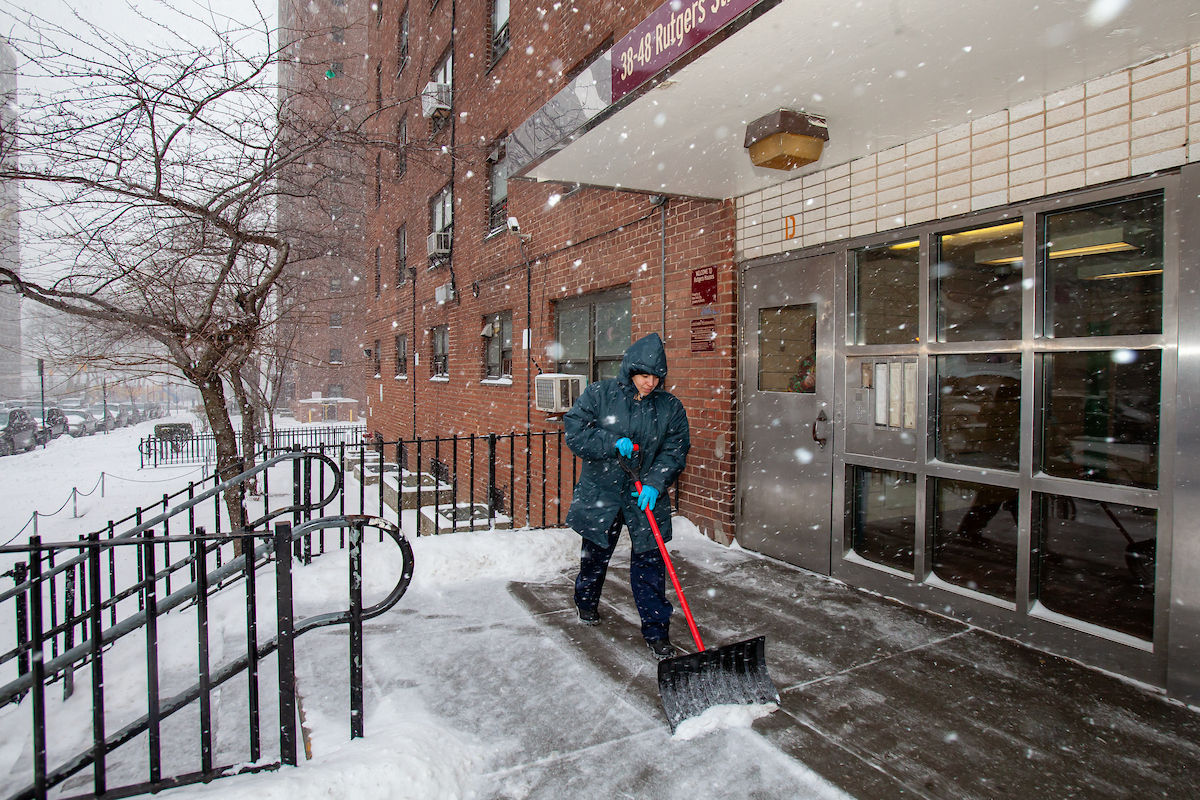
In addition, NYCHA has deployed snow laborers to assist with snow removal. However, due to the timing of the storm please be patient with our snow removal process. We expect to do most of the clearing starting Monday afternoon (once the accumulations end) and this will carry over into Tuesday morning. That is why it’s extremely important to follow the City’s guidance to stay indoors while emergency operations progress.
NYCHA residents experiencing service disruptions, including for heat/hot water, should call the Customer Contact Center at 718-707-7771 or submit work tickets through MyNYCHA.
Stay informed: Before and during an emergency, the city will send emergency alerts and updates to New Yorkers through various channels, including Notify NYC. Notify NYC is available in 14 languages, including American Sign Language (ASL). Sign up for emergency notifications online or call 311.
Cold weather puts extra strain on the heart. Be careful when shoveling snow. Residents with heart disease or high blood pressure should follow the advice of their healthcare provider.
It is safer to stay indoors. Non-emergency appointments and activities should be rescheduled. Consider pivoting in-person services to remote where appropriate. Providers should adjust services for clients as needed, including consideration for clients who are homebound and may need access to supplemental meal delivery or medical services.
Residents who go outdoors should wear dry, warm clothing and cover exposed skin. Keep fingertips, earlobes, and noses covered. Wear a hat, hood, scarf, and gloves. Shivering is an important first sign that the body is losing heat. Shivering is a signal to return indoors.
Seniors and those with disabilities should take extra care outdoors to avoid slips and falls. Small accumulations of ice can be extremely dangerous to pedestrians. Exercise caution and avoid slippery surfaces; some ice may not be visible. Wear sturdy boots that provide traction to reduce slipping. Use handrails when using stairs.
Be prepared for public transit cancellations and delays, including longer wait and ride times on MTA Access-A-Ride (AAR). For AAR service updates, issues regarding same-day trips, trip updates, and to cancel trips, please call Access-A-Ride at (877)-337-2017. For updates on subway and bus service, please visit www.mta.info.
A stove or oven should never be used to heat a home. Anyone using an electric heater should make sure it is plugged directly into a wall outlet (not an extension cord or power strip) and keep it away from any flammable items (such as clothing).
Ensure smoke detectors and carbon monoxide detectors are installed and working properly.
Be prepared for potential power outages. If an outage occurs, turn off all appliances, keep refrigerator/freezer doors closed to prevent food spoilage, and do not use generators indoors. People who use life-sustaining equipment (LSE) and need immediate assistance should dial 911.
Report outages, downed power lines, and damaged electrical equipment to power providers immediately. Con Edison’s 24-hour hotline is 800-75-CONED (752-6633) (TTY: 800-642-2308). Outages can also be reported online on Con Edison’s website. National Grid’s 24-hour hotline is 718-643-4050 (TTY: 718-237-2857). PSEG Long Island’s 24-hour hotline is 800-490-0025 (TTY: 631-755-6660).
Report downed trees and damaged tree limbs to 311; if there is immediate danger, call 911.
Limit alcohol intake. Drinking alcohol causes the body to lose heat faster. Alcohol also impairs judgment, which limits the ability to take appropriate precautions. As a result, alcohol actually increases your chances of hypothermia and frostbite.
Stay safe!