
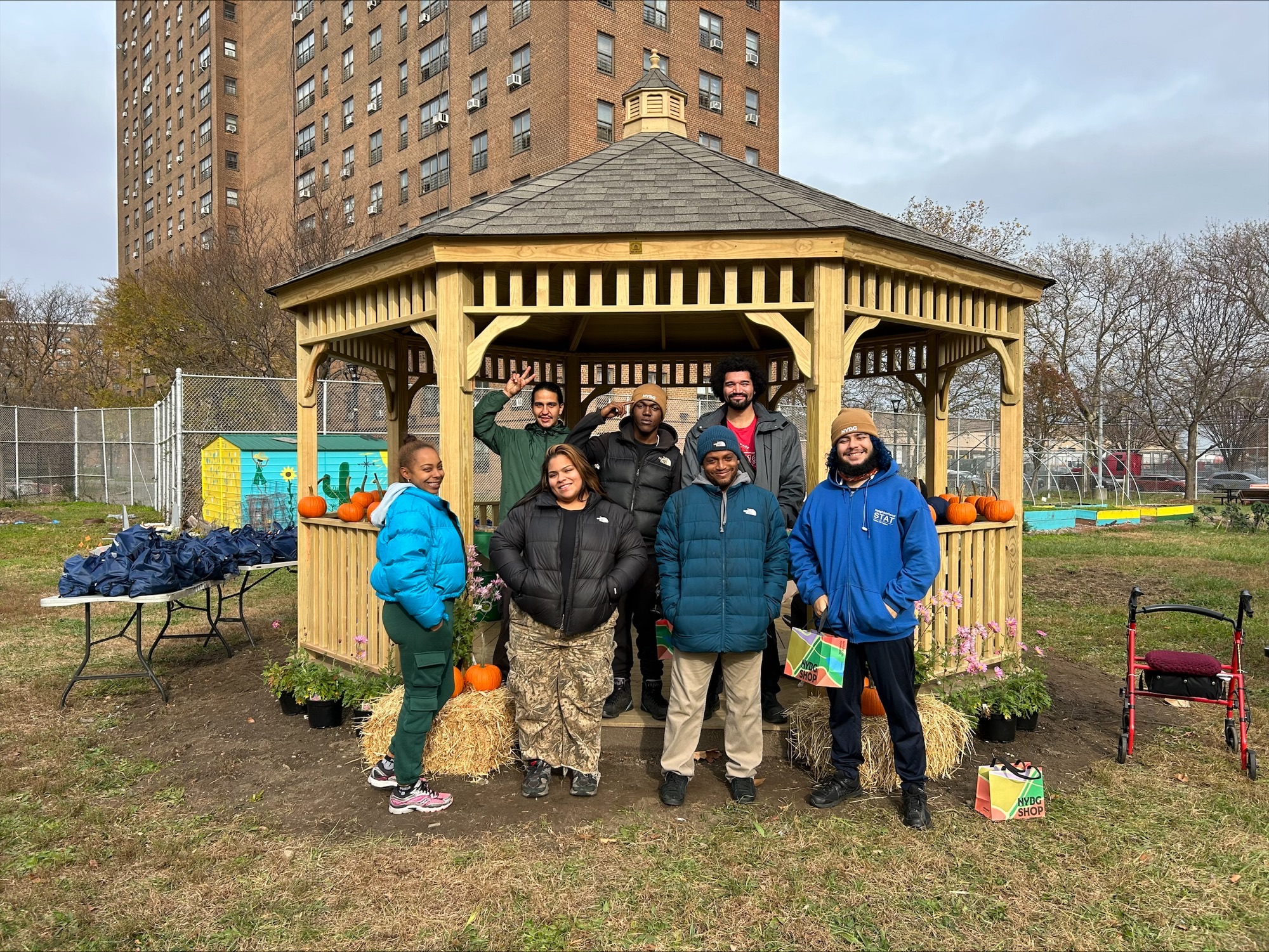
Women Shaping a More Sustainable NYCHA Future
A Conversation with NYCHA Resident Melinda Figueroa and NYCHA Employee Elena Cromeyer
This year’s Women’s History Month theme, “Leading the Change: Women Shaping a Sustainable Future,” highlights the way women are working to build stronger communities today for the generations to follow.
To explore an example of one of the many types of sustainability work at NYCHA, The NYCHA Journal spoke with a resident and employee who work together as part of NYCHA’s Farms and Gardens initiative.
Adams Houses resident Melinda Figueroa is the Coordinator of Urban Agriculture at NYBG Bronx Green-Up, which manages Karol’s Urban Farm at Castle Hill Houses in the Bronx. Ms. Figueroa got her start in urban agriculture as a former Green City Force Corps Member.
NYCHA employee Elena Cromeyer, Deputy Director of Resident Health Initiatives, manages NYCHA’s Farms and Gardens programs. She has worked in public health for more than 18 years and is a doctor of public health candidate whose research focuses on the impact of littered cigarette butts and disposable vapes on humans, animals, and the environment.
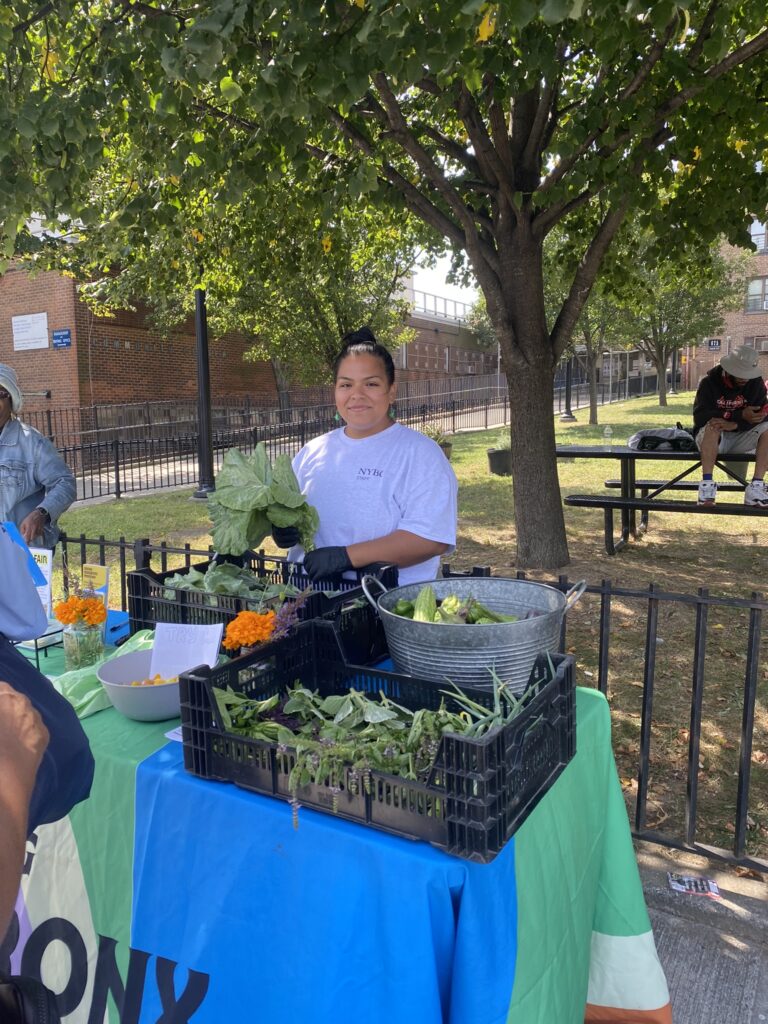
Together, they shared how their work intersects and how NYCHA residents and staff are working together to help shape a more sustainable future for NYCHA communities.
Q: How do you define sustainability in your daily work?
Melinda: For me, sustainability is about building stronger communities and thinking about how we leave the land and the world for the next generation. We want to make sure there’s no food insecurity and that we teach people sustainable practices, especially in the city and NYCHA developments. That takes outreach, education, and time, and we’re doing all of this at the NYCHA farms.
Elena: In my work, sustainability is more than creating healthy environments but also creating communities where NYCHA families can thrive over the long term. That includes supporting resident-led farms and gardens that grow healthy food and create green spaces. It also means advancing programs that improve health, including creating smoke-free environments; advancing infant, maternal, and mental health; and building partnerships that expand access to care. Ultimately, it’s about building healthier environments and stronger institutions that support residents now and into the future.
Q: What role can NYCHA residents play in creating a more sustainable future for NYCHA residents?
M: As a community of residents, we need to come together, look at what issues at NYCHA need improvement, and work together on bettering them. We can start by cleaning up our developments together, learning about composting, and getting involved in programs. Sustainability starts with building a stronger sense of community.
E: Residents are at the heart of creating a more sustainable future at NYCHA. How we center a lot of our work is by positioning and supporting residents so they can steward green spaces, grow food, and share what they know about stewarding green spaces across generations. We want to ensure that residents transfer their knowledge between NYCHA communities so that they’re helping build systems that support community health.
Q: What have you learned from each other’s perspectives that has helped shape how you think about sustainability?
E: Melinda is a good example of what we see across our farm programs: NYCHA residents bringing their deep knowledge of their communities to this work. They bring a context to this work that I wouldn’t know. Many NYCHA gardens date back to the 1960s and exist because residents have invested in these spaces for years. Working with Melinda and other residents reminds me that sustainability isn’t just about science or policy – it’s very much entrenched in relationships, trust, and long-term community care.
M: It’s a unique experience because I’m a resident and someone working at a NYCHA farm, so I see things from both perspectives. I understand what residents want, but I also see what resources are available and how we can use them to expand the community. Sometimes residents might say they want another park instead of a farm; meanwhile, there are three parks at their development, and they don’t realize that a farm could provide food and jobs.
What advice would you give to the next generation of girls growing up in NYCHA and working at NYCHA?
M: Don’t be so hard on yourself. Life can be challenging and things may not go exactly how you planned. Take advantage of every opportunity you can. NYCHA offers all these amazing and free programs, and you never know when a skill or certification might help you later in life. Also, we have to look out for each other and be kinder to ourselves as women.
E: I hope the next generation sees that their voices and their leadership matter. My advice is to stay curious and independent in your thinking. You don’t have to do things in a traditional way. Stay connected to your community and never underestimate your abilities and the impact you can have when you work hard and stay committed to your values and passions.
What gives you hope for the future of NYCHA communities?
M: Seeing people come out to the farm to participate in programs gives me hope. NYCHA has so many amazing programs and opportunities, and when residents get involved, it creates stronger connections.
E: The leadership I see at NYCHA, with our two leads being women. But not only at the agency – in the community as well. Women have traditionally been the backbone of maintaining community spaces, gardening, and food-growing efforts at NYCHA developments. Seeing women pursuing higher education, stepping into leadership goals, and seeing that momentum at NYCHA gives me hope for a more equitable and sustainable future for the next generations.
NYCHA’s Farms and Gardens program builds collaboration between residents and partners to activate open spaces, strengthen community health and wellbeing across generations, and advance environmental sustainability.
To contact the team, email gardens@nycha.nyc.gov or call (212) 306-8282 and leave a message.
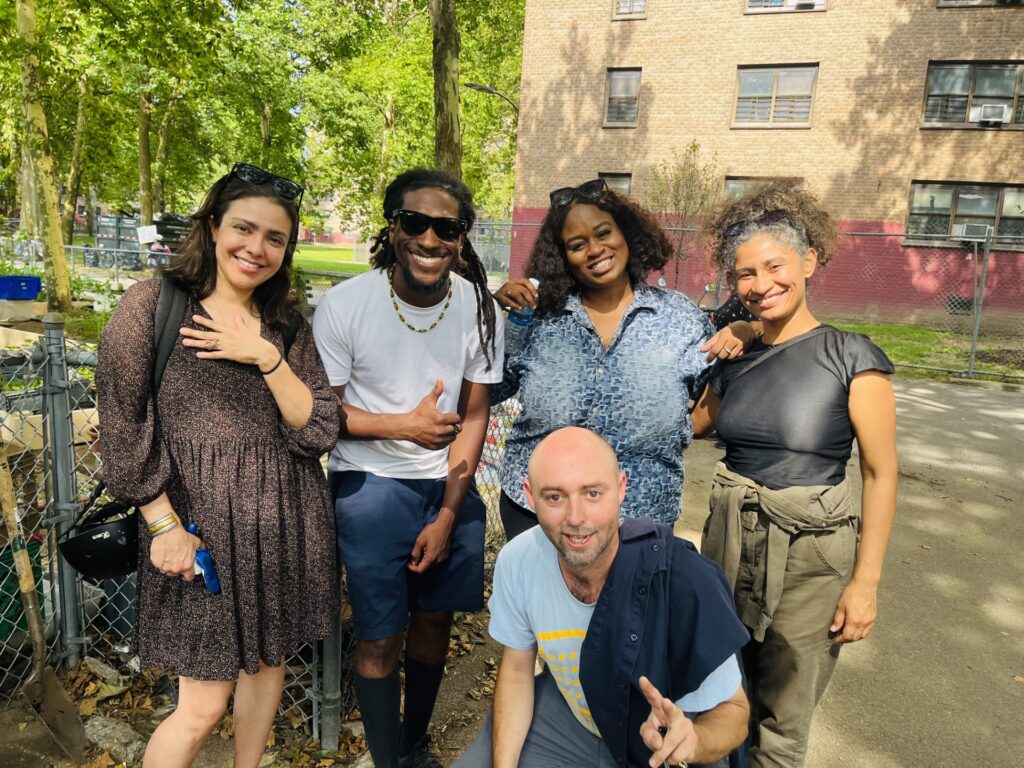
Featured photo caption: Melinda Figueroa with colleagues at Karol’s Urban Farm.