New Eco-Friendly Open Space at Marlboro Houses
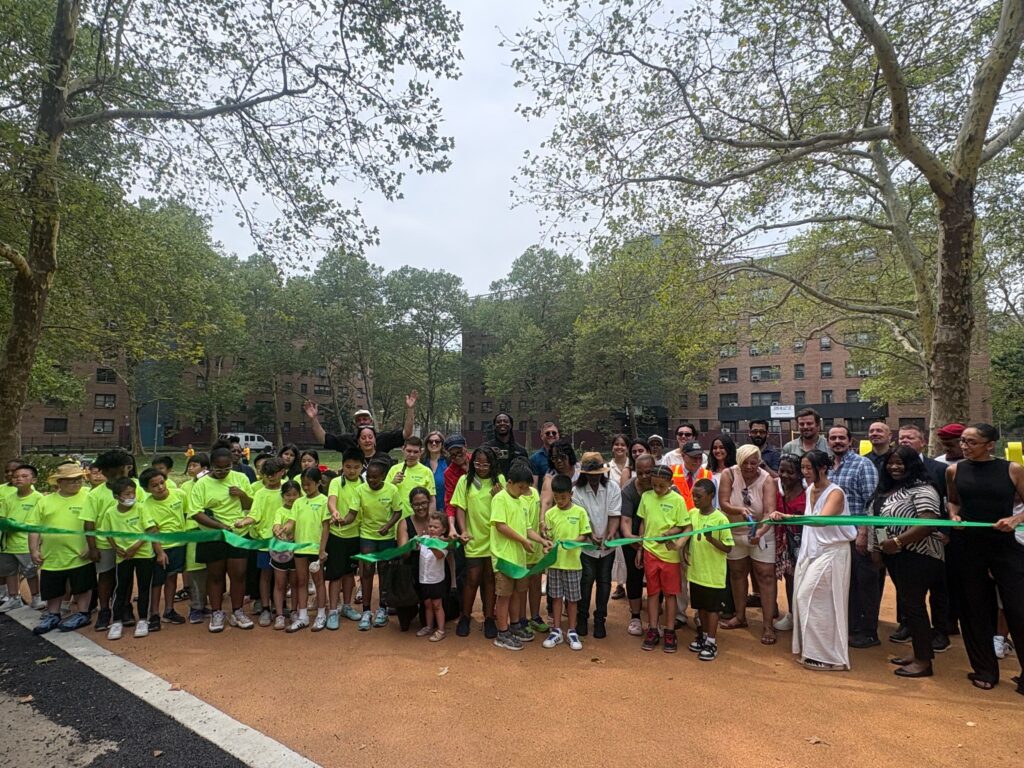
On July 15, The Public Housing Community Fund (PHCF), NYCHA, the Center for Justice Innovation (CJI), The Urban Conga, Cork Collective, The New York Climate Exchange, Field Form, IFIXXNYC Builders, Rockwell Group, The Design Trust for Public Space, 3×3, and the Marlboro Houses Resident Association unveiled a half-million dollar-plus investment that redevelops over 7,200 square feet square feet of open space at Marlboro Houses in Gravesend, Brooklyn. The renovation is the final project of the second phase of PHCF’s Green Space Connections, a $3.2 million initiative funded by The Leona M. and Harry B. Helmsley Charitable Trust to create and activate community-designed open space in NYCHA communities.
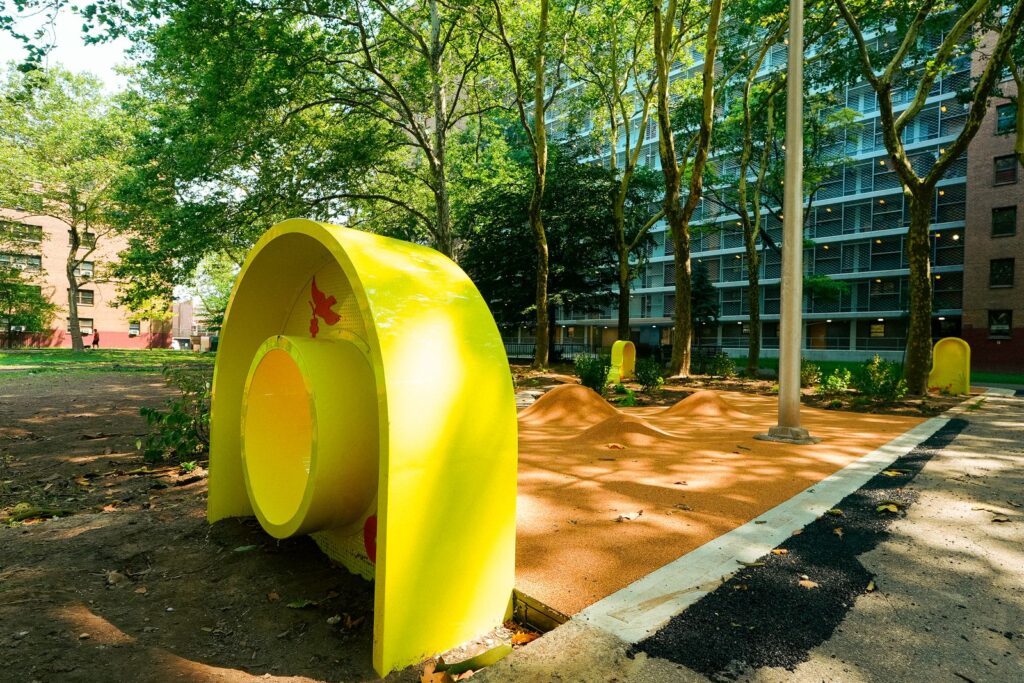
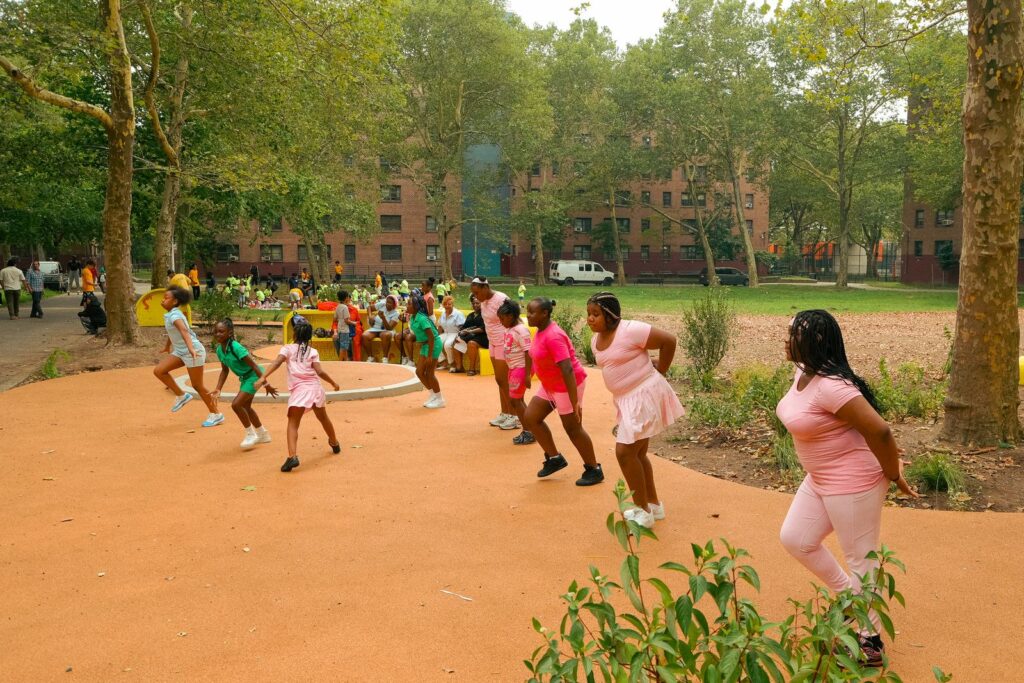
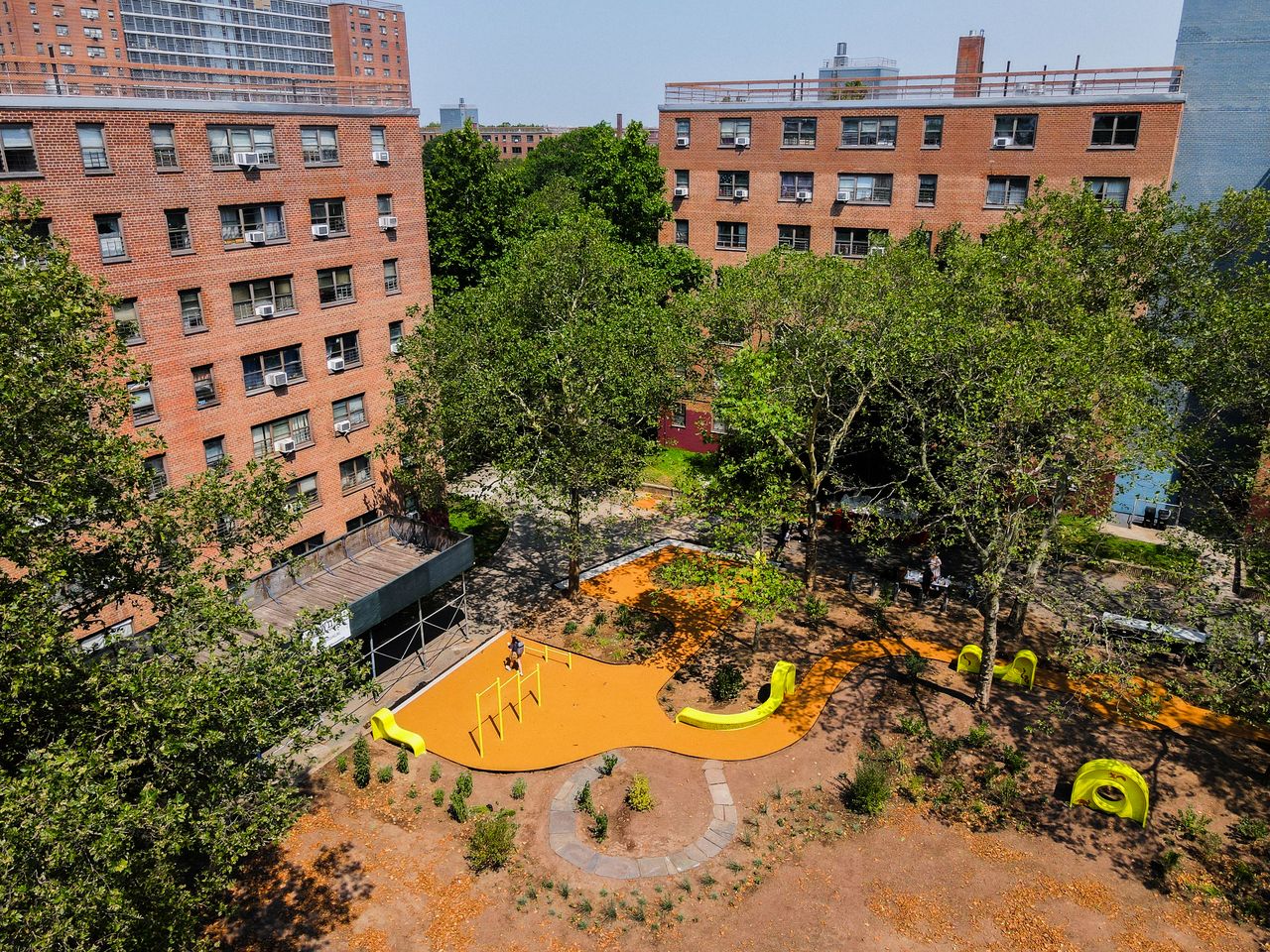
Designed with extensive community-input by lead designers The Urban Conga and CJI, the project brings new accessible pathways for improved navigation, custom-fabricated dynamic play and sensory features, and an innovative stormwater mitigation system. At the heart of the project is a continuous pathway made from cork — a sustainable, durable, and highly permeable natural surfacing material that provides a soft, accessible walking surface, comprising approximately 450,000 recycled corks, including corks collected from NYC restaurants and other Cork Collective partners.
The cork pathway at Marlboro Houses represents the New York City installation of a first-of-its-kind initiative by Cork Collective — a joint venture between Rockwell Group, Amorim, and BlueWell — with material and labor donated to the project. Cork Collective envisions new uses for recycled cork that engage civic improvement projects in cities around the country, from pathways and innovative flooring solutions, to seating and recreational equipment.
“This project delivers a resident-driven, accessible space that weaves green design into every element while creating a safer place for children to play and older adults to enjoy the outdoors,” said Alex Zablocki, Executive Director of Public Housing Community Fund. “The new cork pathway invites residents into a more welcoming environment while showcasing innovative, sustainable materials. Through Green Space Connections, resident feedback and priorities shape every stage of the design process, and this project reflects that commitment in every detail. We’re grateful to our partners for their shared dedication to creating vibrant, people-centered spaces across NYCHA communities. We look forward to expanding this work throughout the five boroughs in the next phase of Green Space Connections.”
“This beautiful, eco-friendly open space at Marlboro Houses shows what we can accomplish through resident-led design and strong partnerships,” said NYCHA Chief Executive Officer Lisa Bova-Hiatt. “Accessible green spaces are vital to the health and well-being of our communities, and we’re proud to center residents in the design process while implementing innovative features and sustainable materials. We are grateful to the Marlboro Houses Resident Association, the Public Housing Community Fund, and all of our partners for their collaboration in bringing this project to life.”
“The newly opened green space at Marlboro Houses is a great example of how New York City is leading the way on community-driven sustainable design and climate resilience through public-private partnerships,” said Vicki Cerullo, Director of Urban Engagement at The New York Climate Exchange and Green Space Connections Advisory Committee Member. “It has been an honor to serve on the Green Space Connections Advisory Committee, and I look forward to the expansion of this work providing even more climate-resilient spaces for NYCHA residents across the city.”
“It was an honor to help lead the design process of a project that could only come to life through a collaborative partnership between institutions and residents. The Green Space Connections and Connected Communities programs created a process that genuinely valued community voices and welcomed residents as co-authors. Together, we were able to shape a space that reflects the people, stories, and aspirations of the community it was designed to serve,” said the Project Lead Architects, Maeghann Coleman and Ryan Swanson at the Urban Conga. “Working with NYCHA, the Public Housing Community Fund, and the Center for Justice Innovation throughout the Marlboro Green Space Connections project has grown into a strong and meaningful partnership. From the outset, they supported our studio in every way to lead an open and inclusive community engagement process, from designing workshops to developing outreach strategies that fostered genuine participation. Their commitment to the process was instrumental in helping us build authentic relationships with residents and ensuring that community voices meaningfully shaped the project’s outcome.”
“When we launched the Cork Collective, our dream was to transform cork stoppers into sustainable, beautiful, durable surfaces for public spaces and activities in New York City,” said David Rockwell, Co-Founder of Cork Collective and Founder and President of Rockwell Group. “It’s incredible to see our vision realized at Marlboro Houses. We hope these pathways inspire and support residents as they connect with the outdoors and each other.”
“Field Forms’ goal was to let the landscape’s history guide its future,” said Samuel Robinson, Owner of Field Form. “By developing a planting strategy inspired by the former marsh that occupied this site, we maximized ecological value through resilient native plant communities that improve stormwater performance, expand habitat, and demonstrate how vegetation can become critical green infrastructure.”
“We are honored to have worked with PHCF, CJI, and NYCHA to lay the groundwork for the Green Space Connections project,” said Matthew Clarke, Executive Director of the Design Trust for Public Space. “This innovative new public space by and for the Marlboro Houses community embodies the potential of what New York City neighborhoods can and should be. Connecting public space with public housing through excellent and sustainable design makes the five boroughs more interconnected and a better place to live for all of us.”
“It is an honor to partner with Public Housing Community Fund, NYCHA, Urban Conga, Rockwell Group, Field Forms and the many other collaborators who made this project possible, including the residents of Marlboro Houses, whose leadership was central to the co-design of these vibrant new community spaces,” said Rasmia Kirmani, Chief Program Officer of Community Safety at the Center for Justice Innovation. “At the Center for Justice Innovation, we believe that communities are central to defining what safety and well-being should look and feel like. Resident voice, resident choice, and strong partnerships have the power to bring that vision to life. These imaginative green spaces are a testament to what can be achieved through partnership, shared leadership, and community-led design.”
Through a series of co-design workshops with Marlboro Houses residents and the development’s property management team led by project architects at The Urban Conga, the design team discovered that the green spaces at Marlboro were underutilized and frequently affected by stormwater flooding. This project activates green space access while considering natural and climate threats, utilizing native plants and project design that takes into account on-site natural features. The community identified the need for a space that could serve not only as a welcoming gathering place but also as a sustainable landscape strategy while supporting everyday community life. From early conversations with residents about the hopes for the campus to the final design of the park spaces, the community gave their stories, experiences, feedback, and more to shape every component of the project.
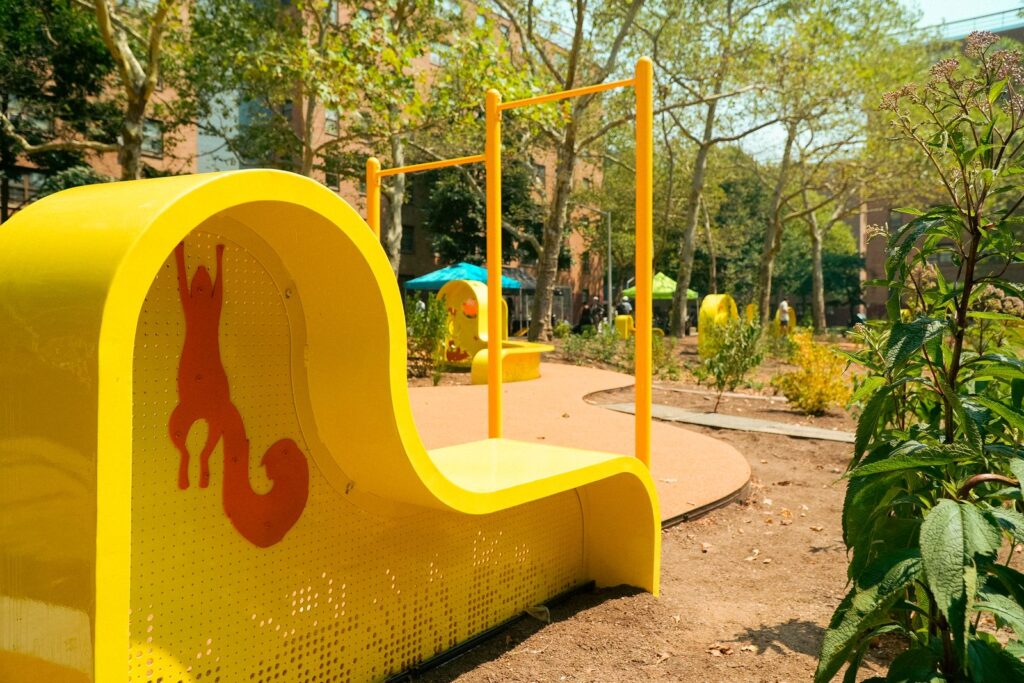
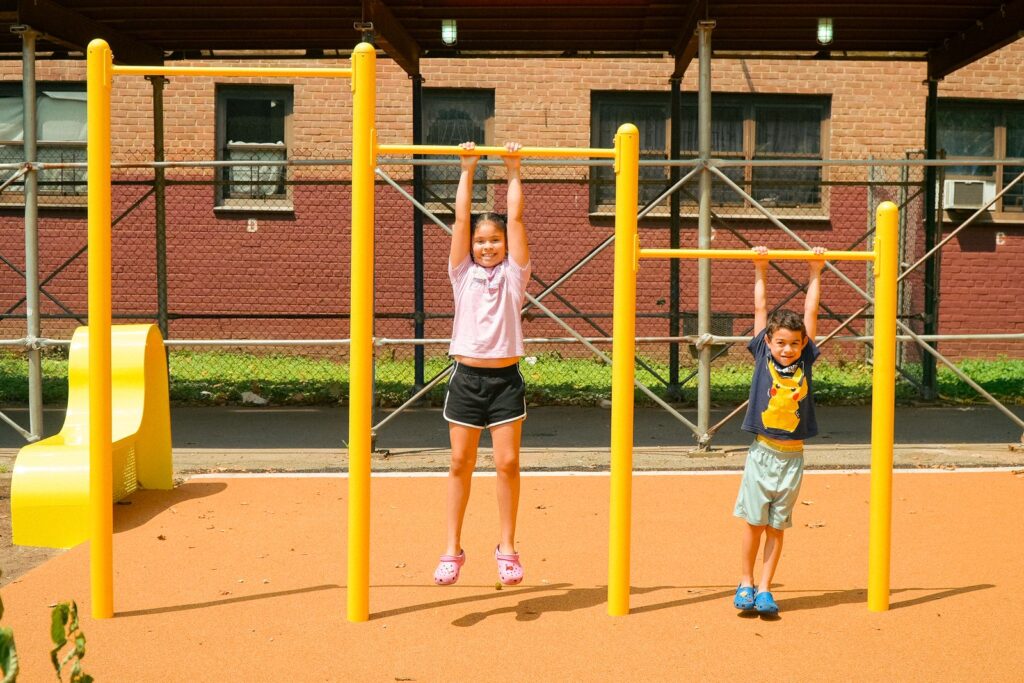
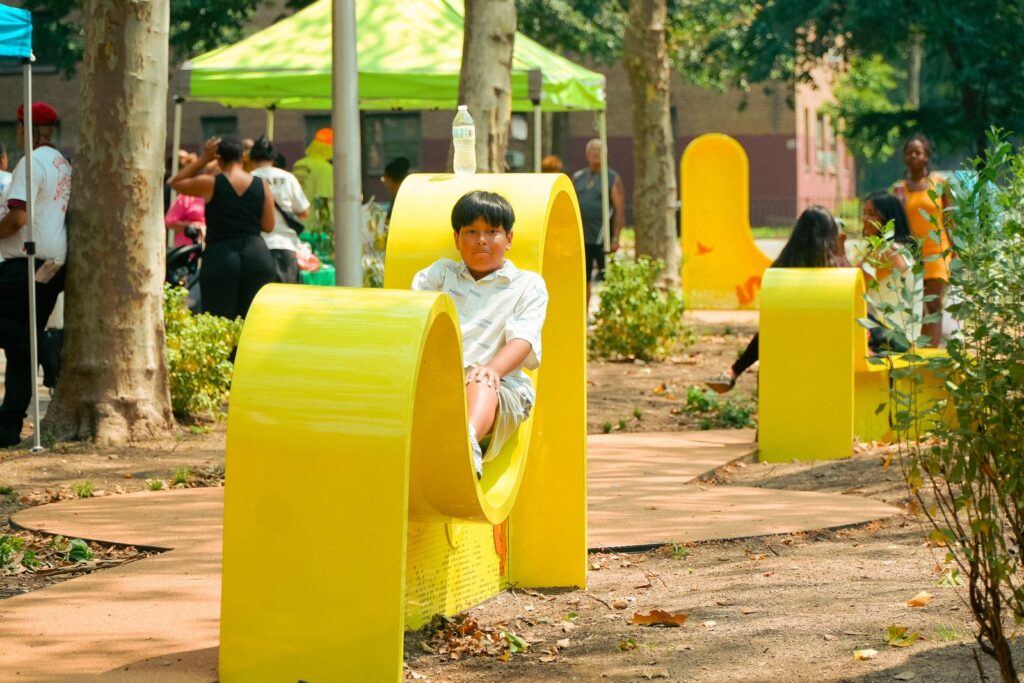
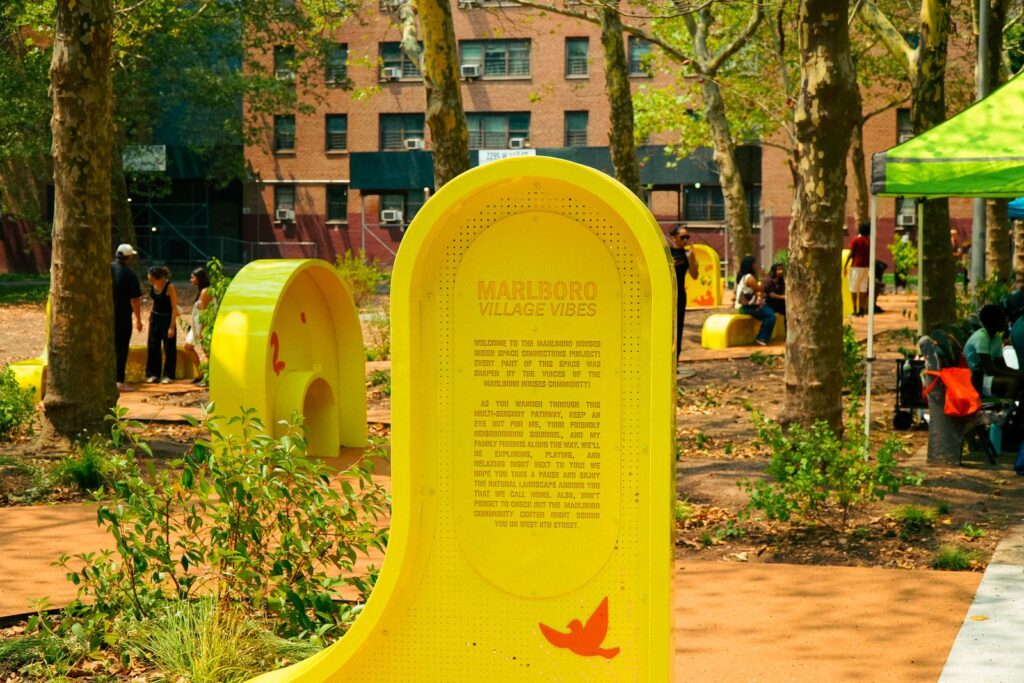
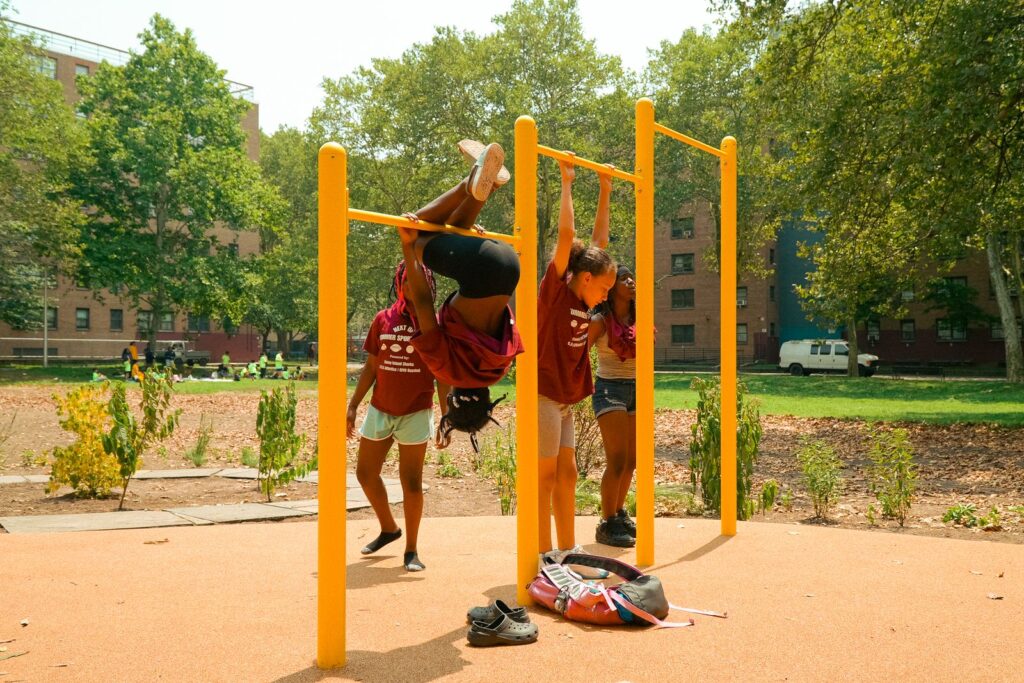
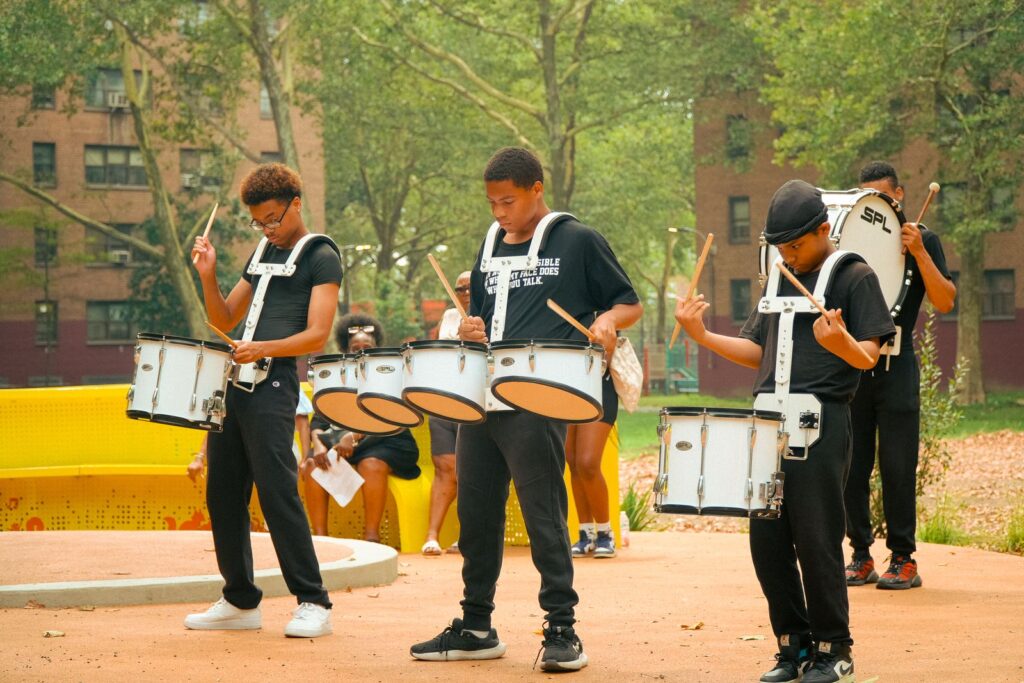
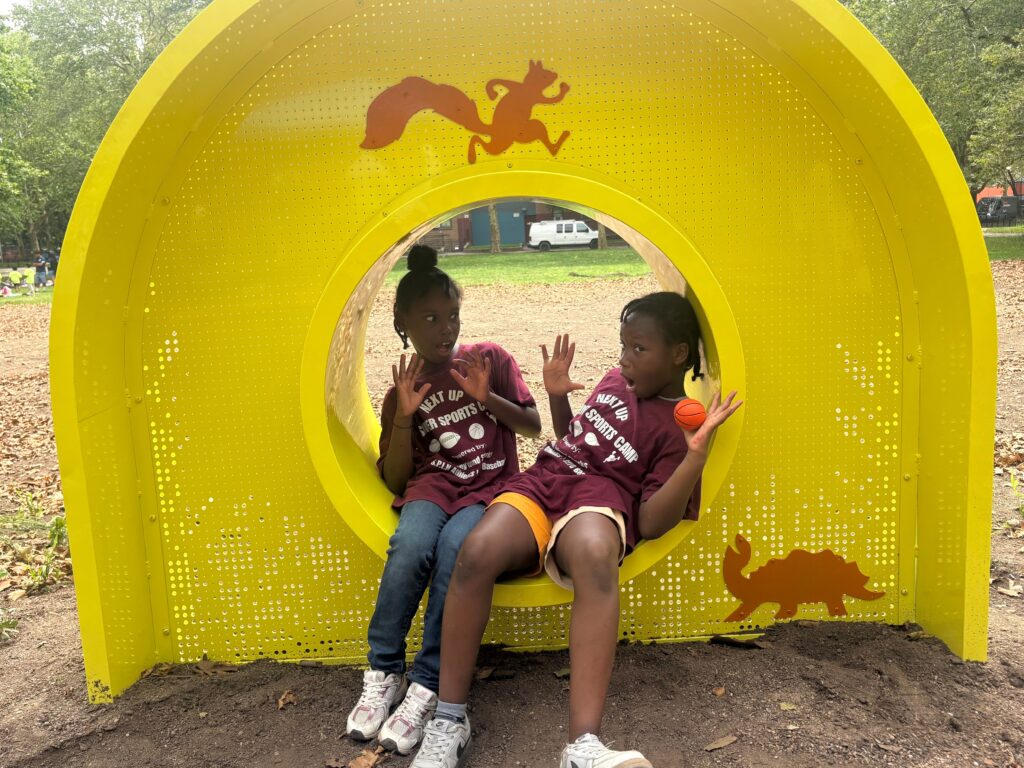
At the heart of the project is a series of multifunctional playable artworks that line the pathways and define different zones throughout the landscape. These custom-designed sensory structures designed by Urban Conga create opportunities for gathering, play, performance, exercise, rest, learning, and discovery. Rather than prescribing a single use, each piece encourages open-ended interaction, allowing residents of all ages to interpret and inhabit the space in their own ways. Together, the one-of-a-kind artworks transform the park into a sequence of playful moments that invite exploration and connection.
The continuous pathway made from recycled cork by Corkeen represents an innovative and novel use of the material by New York-based nonprofit Cork Collective, which upcycled cork for a public community space. With 13 billion cork stoppers produced annually worldwide, less than 1 percent of all corks are recycled each year. In the U.S. alone, approximately 2.9 billion cork stoppers are discarded annually. Made from harvesting the bark of a cork oak tree every nine years, cork is a regenerative, ecological, and sustainable material. No trees are ever felled. Cork oak forests remove enormous amounts of carbon dioxide from the atmosphere, and a single wine cork sequesters more carbon than it emits during the production process.
Recycling cork for playground surfaces not only diverts waste from landfills but also provides a safer, non-toxic alternative to hazardous plastic materials, promoting both environmental sustainability and children’s well-being. Pour-in-place cork surfacing has the advantage of 20-30 percent reduction in temperatures in the summer. Cork playgrounds are infinitely recyclable, do not off-gas as rubber and petroleum-based products do, and are visually beautiful and appealing. Cork surfacing is also antimicrobial, odorless, and water permeable as a system with no chemical runoff.
As the pathways weave through the campus, they integrate small rain gardens, pollinator plantings, and ecological landscaping elements co-designed with Field Form, a Brooklyn-based landscape studio. Together, these strategies support the site’s broader ecological health while also helping manage stormwater across the development.
The project includes the renovation of over 7,200 square feet of open space across two lawned areas on both the east and west sides of West 11th Street. There is a large green space on the north side of the lawn adjacent to Building 16 and a second in the lower southeast corner adjacent to the resident garden and Building 2. Project lead architects at Urban Conga and landscape designers at Field Form were able to extend the design language across both sites, connecting two areas of the development through thoughtful art and play elements, intentional landscaping, and the creation of new community gathering spaces, speaking directly to resident priorities.
The hallmark of Green Space Connections is ensuring resident voices carry through from the first points of engagement and throughout design. At Marlboro, extensive community involvement, guided by a resident-led stakeholder advisory group, reflected the needs and wishes of the residents the project serves. As the final of four projects in the second iteration of Green Space Connections, PHCF and partners also recognize community-led open space investments that were completed at Roosevelt Houses in Brooklyn and Castle Hill Houses and Patterson Houses in the Bronx. Patterson Houses celebrated the completion of transformed open spaces, including two new playgrounds, an adult fitness area, and basketball court upgrades. At Castle Hill Houses, residents chose to add NYCHA’s first dog park to their green space on the campus, alongside a new BBQ area and seating area. At Roosevelt Houses, residents helped transform outdoor community spaces, adding seating, shade, greenery, play, and gathering infrastructure.
One of the strongest signals to emerge from the Green Space Connections evaluation process was that residents already had a meaningful relationship with the green spaces in their neighborhood they had. Long before construction began, people described these spaces as part of the rhythm of everyday life. Green Space Connections built on that foundation, using participatory design to strengthen a place that already carried memory, care, and possibility for the community, and treated community knowledge as essential project infrastructure.
The next phase of Green Space Connections launches this summer at Richmond Terrace Houses in Staten Island, Wagner and Vladeck Houses in Manhattan, and Ravenswood Houses in Queens.
This effort is part of NYCHA’s award-winning Connected Communities program, which focuses on transforming and modernizing public housing open spaces through public-private partnerships and participatory planning and design with residents.
Photo credit: Tameek Williams