
It’s National Electrical Safety Month
National Electrical Safety Month promotes awareness about electrical safety at home and in the workplace. While electricity helps simplify our lives, it also poses serious risks, including shock and fire-related hazards.
To reduce risks:
- Unplug small appliances when not in use (toasters, air fryers, blenders, shavers, etc.).
- Use only one heat-producing appliance plugged into a receptacle outlet at a time.
- Major appliances should be plugged directly into a wall receptacle outlet. Extension cords and surge protectors should not be used.
- Check electrical cords to make sure they are not running across doorways or under carpets.
- Extension cords are intended for temporary use.
- Never plug two extension cords together.
- Regularly test ground fault circuit interrupter outlets (GFCI outlets).
NYCHA recently installed GFCI outlets in kitchens and bathrooms to prevent electrical hazards near water sources. NYCHA maintenance staff will test these outlets whenever they visit your apartment to perform repairs or inspections.
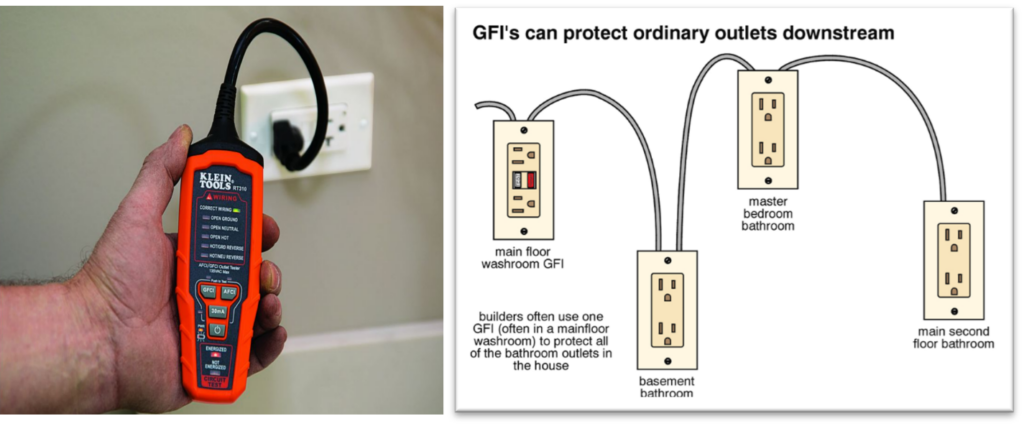
If you have any concerns about electrical outlets or need a GFCI outlet installed, please immediately contact your property management office or the CCC at (718) 707 -7771.
Electric Micromobility Devices in NYCHA Buildings and Apartments
You may keep or charge bicycles with electric assist (e-bikes) and electric scooters (e-scooters) that are legal to operate in NYC bike lanes in your apartment. However, to ensure the safety of your family and your neighbors, the following precautions must be followed:
- You may only charge one e-bike, e-scooter, or battery at a time in a NYCHA apartment;
- Someone 18 years or older must be present and awake in the apartment the entire time the device or battery is charging;
- The charger must be plugged directly into an electrical wall outlet (extension cords or power strips must not be used);
- You cannot keep or charge a lithium-ion battery that has been assembled, refurbished, or reconditioned in a way prohibited by NYC law;
- You cannot charge a lithium-ion battery within five feet of a radiator or any other direct heat source;
- You cannot charge a lithium-ion battery next to an apartment entrance door or any other place that could prevent escape in the event of a fire; and
- You cannot charge an e-bike, e-scooter, or its battery in a common area unless that area is designated as a charging area by NYCHA.
Electric micromobility vehicles and devices that cannot be operated legally in New York City, or that require DMV registration or a driver’s license to operate, are prohibited in NYCHA buildings (for example, electric mopeds, large electric scooters weighing 100 pounds or more, electric motorcycles, gas-powered vehicles and devices, electric dirt bikes, electric skateboards, Segways, electric hoverboards, electric unicycles, and electric all-terrain vehicles, and their batteries). It is a violation of your lease to keep or charge vehicles and devices like these in NYCHA apartments or common areas.
For more information about NYCHA’s electric micromobility policy, click here.
If you have a question about this or any other environmental health and safety matter, email ehs@nycha.nyc.gov.
Report potential violations of laws, rules, or regulations; improper maintenance work intended to hide actual building conditions; poor-quality maintenance work in an apartment or building; unsafe or uncorrected conditions (including lead, mold, pests, heating, elevators, building cleanliness, and fire safety); polices or procedures not followed; or unsafe conditions for NYCHA staff. Reports can be made anonymously at on.nyc.gov/submit-concern.