Resident-Led Open Space Project Coming to Marlboro Houses
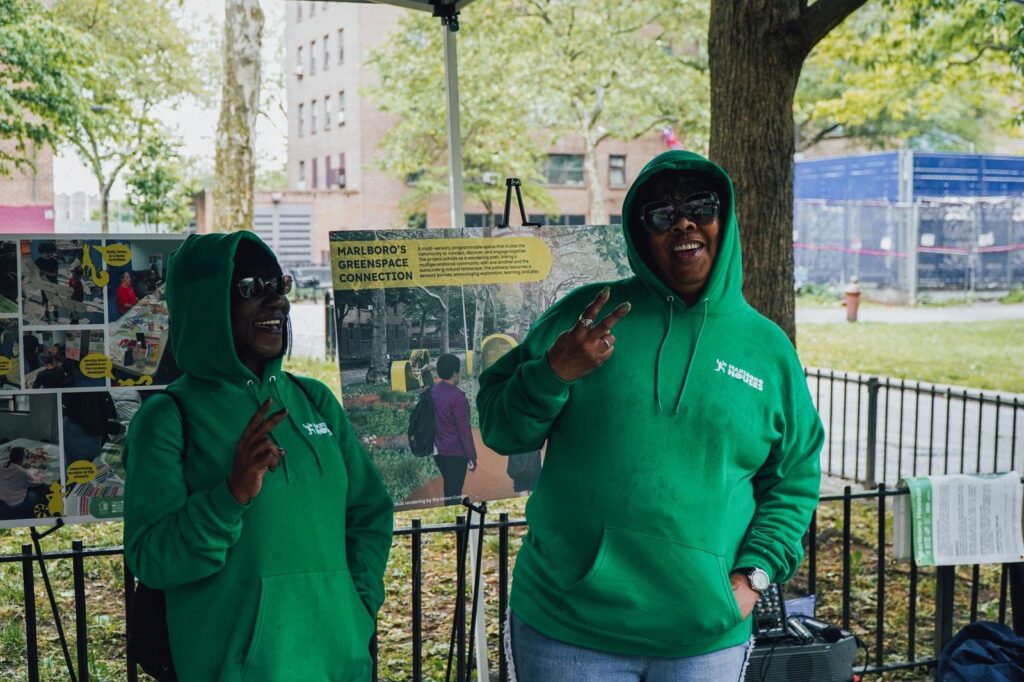
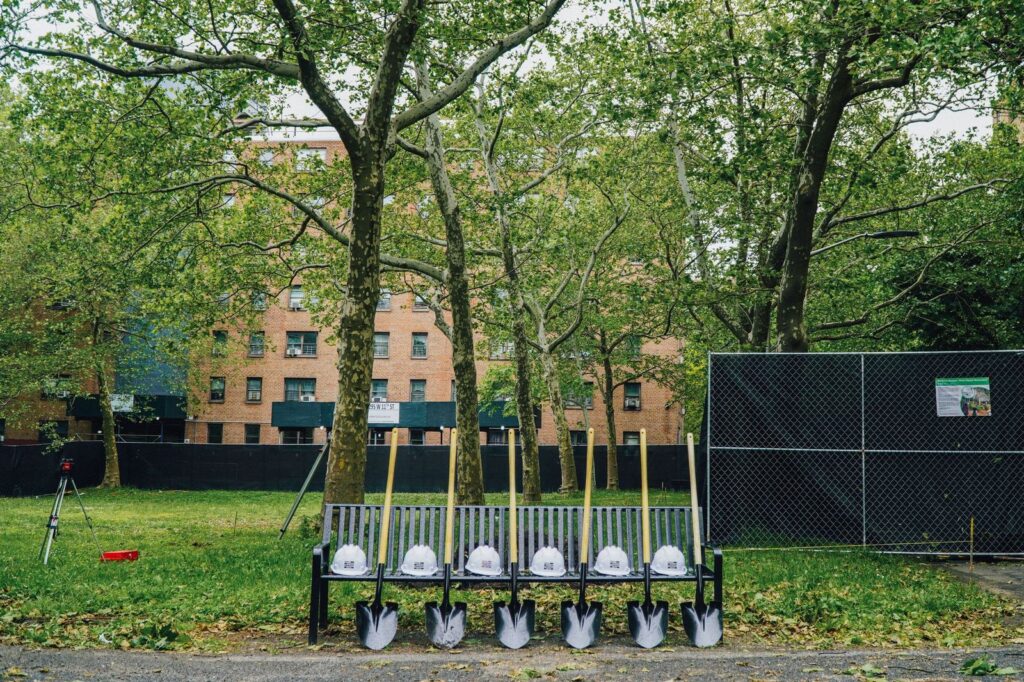
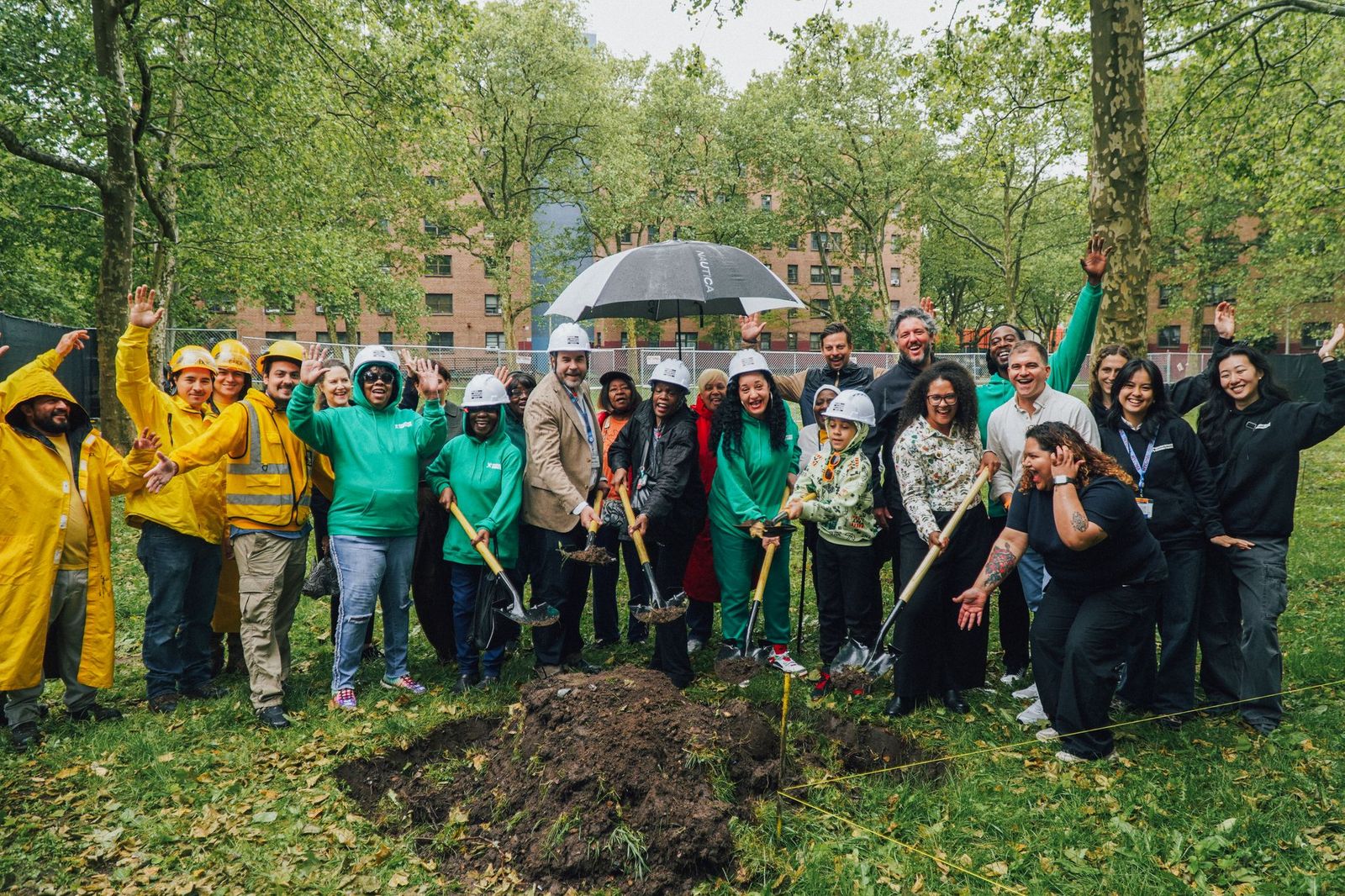
On May 26, the Public Housing Community Fund (PHCF), NYCHA, the Center for Justice Innovation, The Urban Conga, Cork Collective, Field Form, IFIXXNYC Builders, The Design Trust for Public Space, and the Marlboro Houses Resident Association broke ground on a $500,000 project that will redevelop the open space at Marlboro Houses in Gravesend, Brooklyn. The project is part of Green Space Connections, a $3.2 million initiative funded by The Leona M. and Harry B. Helmsley Charitable Trust to create and activate community-designed open space in NYCHA communities.
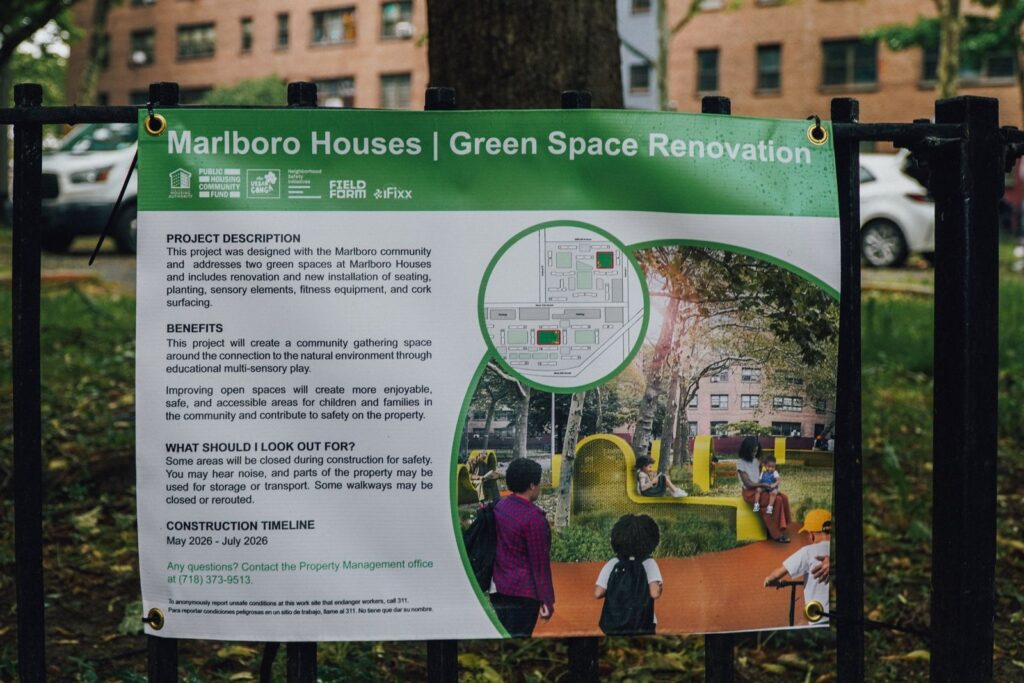
Designed with extensive community input by The Urban Conga, the project will install pathways for improved navigation, dynamic play and sensory features, and an innovative stormwater mitigation system. At the heart of the project is a continuous pathway made from Corkeen — a sustainable, durable, and highly permeable natural surfacing material that provides a soft, accessible walking surface.
“At its core, Green Space Connections serves the joint purpose of empowering NYCHA residents to take ownership of their open space while also making campuses greener and more functional and welcoming,” said Alex Zablocki, Executive Director of Public Housing Community Fund. “This project encapsulates the mission and ethos behind the program, delivering resident-driven, accessible new space that incorporates green design in each facet. With the addition of the cork surfacing, the project at Marlboro ensures its open spaces welcome in residents while using the most sustainable materials. We thank all of our partners and funders for their commitment to building the beautiful open spaces NYCHA residents deserve.”
“Green spaces are important for the health, well-being, and cohesion of our communities,” said NYCHA Chief Executive Officer Lisa Bova-Hiatt. “This project at Marlboro Houses reflects what is possible when residents are placed at the center of the design process — creating spaces that are not only beautiful and welcoming but also resilient, sustainable, and responsive to community needs. We are proud to celebrate this milestone alongside our incredible partners, including the Public Housing Community Fund and the Marlboro Houses Resident Association, whose collaboration and commitment made this vision a reality.”
“We’re creating a greener tomorrow for Marlboro Houses,” said Natasha Franklin, Marlboro Houses Stakeholder Team and Program Coordinator. “We’re creating a safe and beautiful space where community, connection, and growth can thrive together.”
“Working with the Marlboro community brought this project to life and gave them back their open spaces,” said Maeghann Coleman and Ryan Swanson of The Urban Conga. “Throughout the design process, we utilized play methodologies where community members of all ages shared their stories, wants, and needs for their environment in hopes of creating a communal place for activity, reflection, and joy. This project truly explores the value of play beyond the playground and how creating more multigenerational play opportunities can bring neighbors together.”
“Cork is among the most sustainable and re-usable materials in the world,” said David Rockwell, Co-Founder of Cork Collective and Founder and President of Rockwell Group. “And yet it is also among the most disposed of, given the reliance on corks for wine and other bottled spirits. We launched the Cork Collective in New York City because of our shared interest in upcycling this underutilized resource and because repurposed cork is a perfect material for the city’s many public walkways and playgrounds, among other uses. Marlboro is the first community space to feature Cork Collective’s cork surfacing, which includes corks collected from nearly 40 restaurants.”
As part of Green Space Connections, an initiative led by PHCF in partnership with NYCHA’s Asset & Capital Management Division and managed by The Design Trust for Public Space, the new public space at Marlboro was designed with extensive community involvement, reflecting the needs and wishes of the residents it serves. From early conversations with residents about the hopes for the campus to the final design of the park spaces, the community gave their stories, experiences, feedback, and more to shape every component of the project. This effort is part of NYCHA’s award-winning Connected Communities program, which focuses on transforming and modernizing public housing open spaces through public-private partnerships and participatory planning and design with residents.
Through a series of co-design workshops with Marlboro residents and the development’s property management team led by The Urban Conga, the design team discovered that the green spaces at Marlboro were underutilized and frequently affected by stormwater flooding. The community identified the need for a space that could serve not only as a welcoming gathering place but also as a sustainable landscape strategy while supporting everyday community life.
At the heart of the project is a series of multifunctional playable artworks that line the pathways and define different zones throughout the landscape. These sensory structures create opportunities for gathering, play, performance, exercise, rest, learning, and discovery. Rather than prescribing a single use, each piece encourages open-ended interaction, allowing residents of all ages to interpret and inhabit the space in their own ways. Together, the artworks transform the park into a sequence of playful moments that invite exploration and connection.
As the pathways weave through the campus, it integrates small rain gardens, pollinator plantings, and ecological landscaping elements co-designed with Field Form, a Brooklyn-based landscape studio. Together, these strategies support the site’s broader ecological health while also helping to manage stormwater across the development.
The continuous pathway made from Corkeen represents an innovative use of the material, and the first time the New York-based nonprofit Cork Collective has upcycled cork for a public community space. With 13 billion cork stoppers produced annually worldwide, less than 1 percent of all corks are recycled each year. In the U.S. alone, approximately 2.9 billion cork stoppers are discarded annually. Made from harvesting the bark of a cork oak tree every nine years, cork is a regenerative, ecological, and sustainable material. No trees are ever felled. Cork oak forests remove enormous amounts of carbon dioxide from the atmosphere, and a single wine cork sequesters more carbon than it emits during the production process.
Recycling cork for playground surfaces not only diverts waste from landfills but also provides a safer, non-toxic alternative to hazardous plastic materials, promoting both environmental sustainability and children’s well-being. Pour-in-place cork surfacing has the advantage of 20-30 percent reduction in temperatures in the summer. Cork playgrounds are infinitely recyclable, do not off-gas as rubber and petroleum-based products do, and are visually beautiful and appealing. Cork surfacing is also antimicrobial, odorless, and water permeable as a system.
The project includes renovation of over 7,000 square feet of open space located across two lawned areas on both the east and west sides of West 11th Street. The first area is on the north side of the lawn adjacent to Building 16. The second area is in the lower southeast corner of the lawn space adjacent to the resident garden and Building 2.
In addition to Marlboro Houses, Patterson Houses, Roosevelt Houses, and Castle Hill Houses are participating in Green Space Connections. In 2025, Castle Hill Houses cut the ribbon on its new dog park and Patterson Houses celebrated the completion of overhauled open spaces, including two new playgrounds, an adult fitness center, and basketball court upgrades. The work at the final Green Space Connections site at Roosevelt Houses is under construction and anticipated to be completed later this year.
Photos courtesy of Tameek Williams for the Public Housing Community Fund